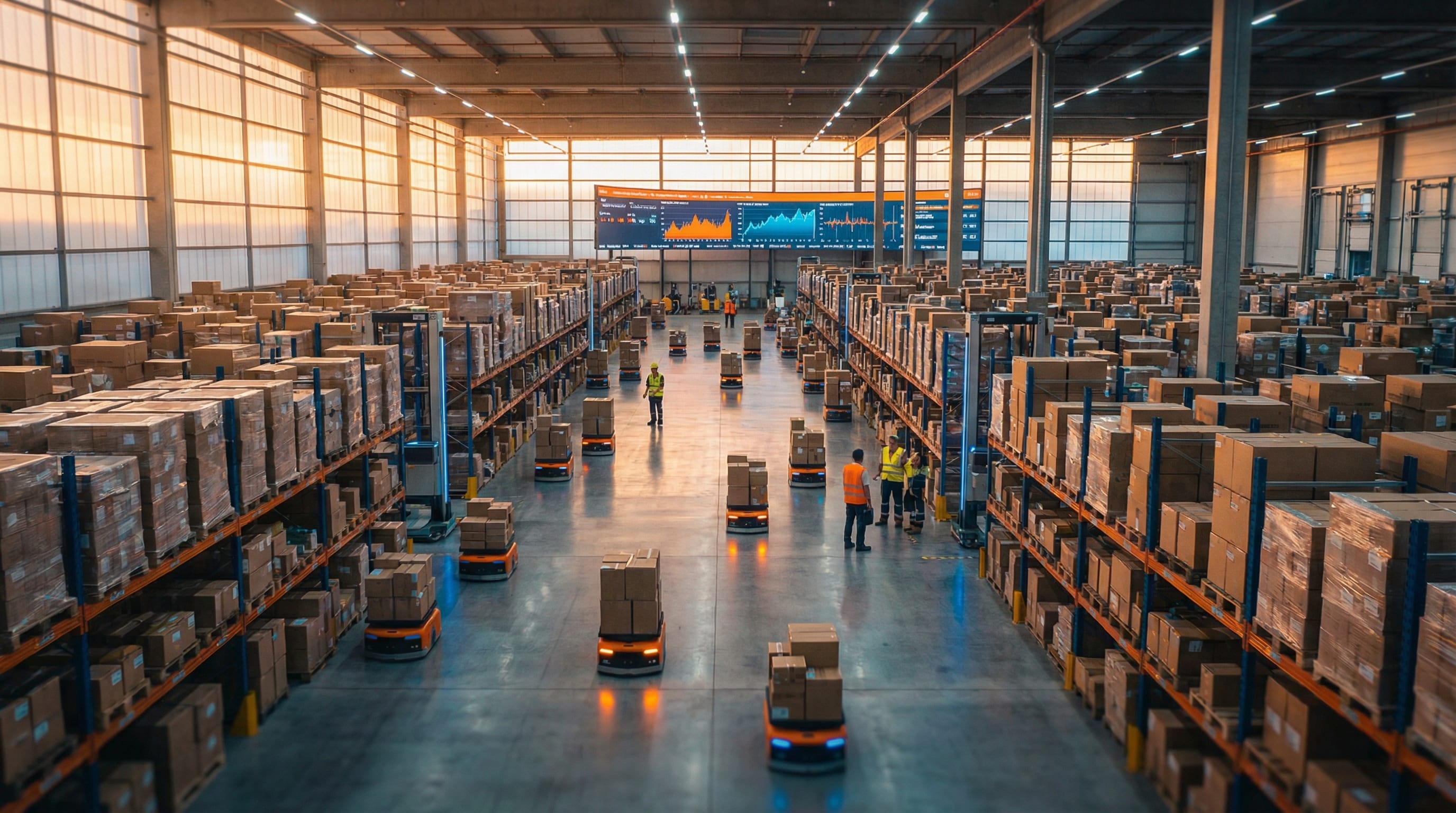
Modern third-party logistics warehouse with autonomous robots and workers managing inventory at scale
3PL & Supply Chain

The Complete Guide to Third-Party Logistics (3PL) Services

From warehousing and fulfillment to AI-powered supply chains — everything you need to know about outsourcing logistics, evaluating providers, and scaling operations in the UAE and beyond.

Axiom Research Team April 3, 2026 20 min read

In This Guide

AX
Axiom X Team
Logistics & Supply Chain · April 3, 2026

What Is Third-Party Logistics?

Third-party logistics (3PL) is the practice of outsourcing supply chain and logistics operations — including warehousing, order fulfillment, transportation, and returns management — to a specialized external provider. Instead of building and managing these capabilities in-house, businesses partner with a 3PL company to handle the physical movement and storage of goods at scale.

The concept is straightforward: you focus on what you sell, and the 3PL handles how it gets to the customer. But in practice, 3PL relationships are deeply strategic. A well-chosen provider becomes an extension of your operations, managing everything from inventory placement to last-mile delivery, customs brokerage, and even product returns.

Business professionals reviewing logistics operations on a tablet inside a modern warehouse

The Logistics Model Hierarchy

1PL: You handle everything in-house — your own warehouse, your own trucks.
2PL: You hire a carrier for transport only. Warehousing stays in-house.
3PL: You outsource both warehousing and fulfillment to a logistics partner.
4PL: A “lead logistics provider” manages multiple 3PLs on your behalf — no physical assets, pure orchestration.
5PL: Network-level logistics using AI and automation to manage supply chains for many clients simultaneously.

“Over 90% of Fortune 500 companies use at least one 3PL provider. Globally, more than 62% of enterprises outsource at least one logistics function.”

— Industry Benchmark Data, 2025–2026

The 3PL Market in Numbers

The global third-party logistics industry is not a niche — it is one of the largest service sectors in the world. As e-commerce continues its double-digit growth and supply chains become more complex, the demand for specialized logistics partners is accelerating across every region and industry vertical.

$1.3T+ Global 3PL market value (2025)
8–10% Annual compound growth rate through 2032
$86B Middle East 3PL market (2025)

Transportation management dominates the 3PL sector, holding roughly 42% of market share by service type. Manufacturing is the largest end-user industry at 28–29%, followed closely by retail and e-commerce. The momentum shows no signs of slowing: 55% of companies plan to increase their logistics outsourcing in the near future, and analysts forecast the global market will surpass $2.7 trillion by the early 2030s.

For the UAE specifically, the logistics market was valued between $54.5 billion and $65 billion in 2025, with a projected CAGR of 5.5–8.2% through the next decade. The Middle East 3PL market alone is expected to exceed $174 billion by 2033.

Types of 3PL Services

Third-party logistics is not a single service — it is an umbrella term covering a wide range of supply chain functions. Most modern 3PL providers offer multiple services under one roof, but understanding each category helps you identify exactly what you need to outsource and what to keep in-house.

Service What It Covers Best For
Transportation Management Domestic and international movement of goods via road, air, rail, or sea. Includes LTL, FTL, parcel shipping, route optimization, and carrier negotiation. Businesses shipping high volumes across multiple regions or countries
Warehousing & Storage Physical storage with inventory management systems, climate control for perishables, real-time stock tracking, and dynamic slotting. Companies needing scalable storage without owning facilities
Order Fulfillment End-to-end pick, pack, and ship operations. The 3PL locates the item, packages it, and hands it to a carrier. E-commerce brands with high order volumes and fast delivery expectations
Freight Forwarding Intermediary services between businesses and shipping carriers. Negotiates rates across multiple carriers for international shipments. Importers/exporters needing multi-modal international shipping
Customs Brokerage Managing international trade compliance, paperwork, tariffs, and taxes to clear shipments through borders. Cross-border traders in complex regulatory environments (GCC, EU)
Reverse Logistics Receiving returned products, inspecting for damage, processing refunds/exchanges, and determining disposition (restocking, repair, recycling, or disposal). E-commerce and retail with high return rates or warranty programs
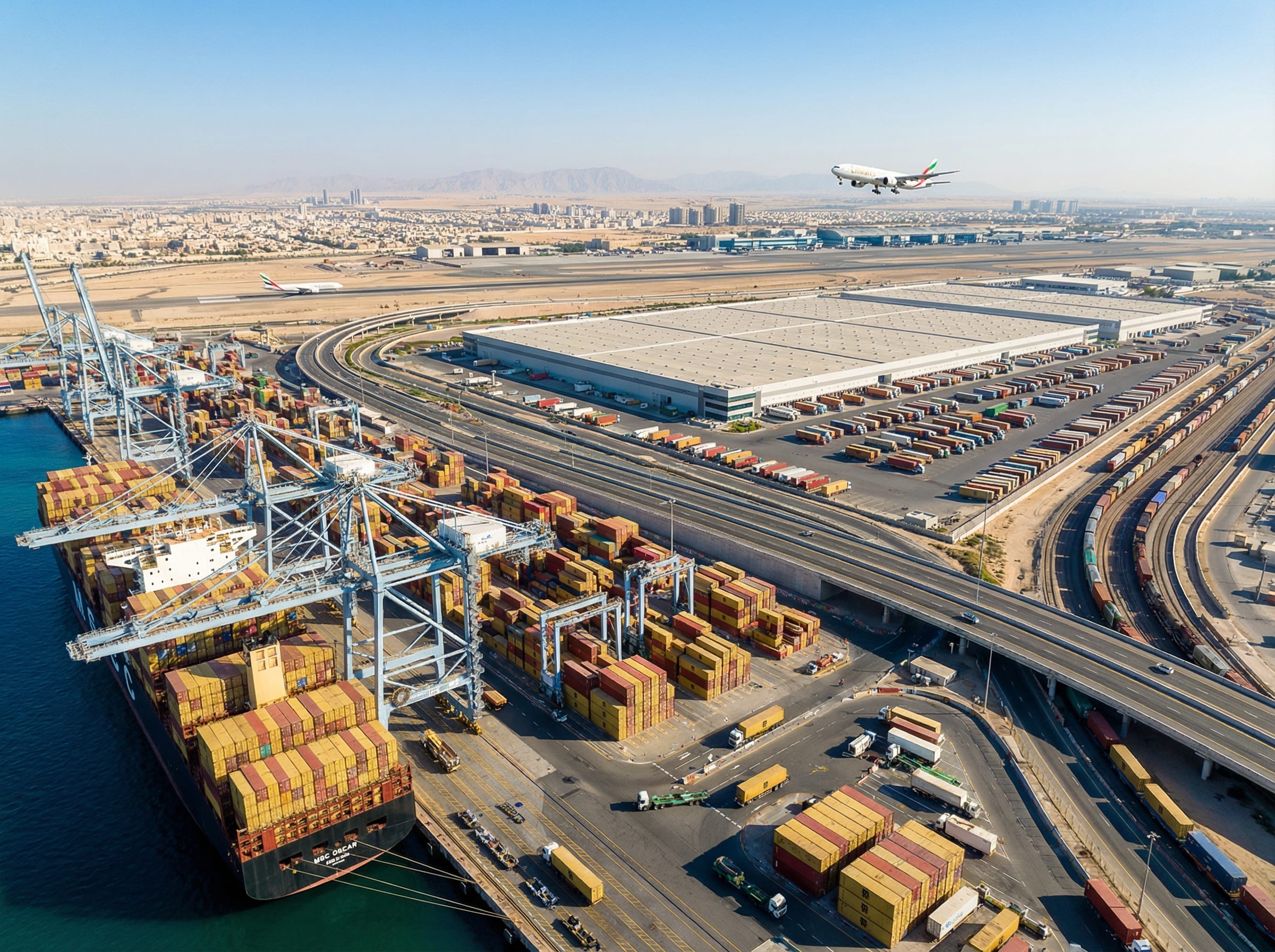
Aerial view of a multi-modal logistics hub with container ships, cargo aircraft, and warehouse facilities
Modern 3PL providers manage the full supply chain — from port-side unloading and customs clearance through warehousing, fulfillment, and last-mile delivery.

Benefits vs. Challenges of 3PL Outsourcing

Outsourcing logistics to a 3PL is not a silver bullet. It brings significant advantages — cost savings, scalability, access to technology — but it also introduces new risks and dependencies. Understanding both sides is essential before signing a contract.

Key Benefits
  • Volume discounts: 3PLs aggregate shipping across dozens of clients, securing carrier rates you cannot get alone
  • Scalability: Scale up for Ramadan or White Friday and down in slow months without fixed leases or idle labor
  • Advanced technology: Access to WMS, automated storage, and AI-driven predictive analytics without massive capital expenditure
  • Geographic reach: Distribute inventory across multiple strategic nodes to reduce transit times
  • Focus on core: Free internal resources for product development, marketing, and growth
Common Challenges
  • Loss of direct control: Packaging quality, branding consistency, and handling are in someone else’s hands
  • Complex integrations: Connecting your ERP/Shopify/WooCommerce to the 3PL’s WMS can be time-consuming
  • Hidden surcharges: Accessorial fees for receiving, long-term storage, and special handling can inflate costs
  • SLA misalignment: Your definition of “fast” may not match theirs without contractual penalties
  • Data dependency: Your inventory visibility is only as good as the 3PL’s reporting tools

Mitigation tip: Establish detailed SOPs for packaging, branding, and quality standards before onboarding. Demand fully itemized quotes focused on “fully landed cost per order” rather than line-item rates. And negotiate contractually binding SLAs with financial penalties for missed targets — a strong 3PL will welcome accountability.

3PL Cost Structures Explained

Understanding how 3PL providers price their services is critical. Most quotes look straightforward on the surface, but the real cost lives in the details — receiving fees, long-term storage penalties, and value-added surcharges. Here is the breakdown of every cost layer you should expect.

01

Storage & Warehousing

Typically $15–$40 per pallet per month or $0.43–$0.78 per cubic foot. Watch for long-term storage penalties: 48.6% of warehouses now charge 1.5x to 3x the base rate after 60–90 days of idle inventory. Per-cubic-foot pricing is increasingly popular for e-commerce because it more accurately reflects the space your SKUs actually use.

02

Inbound & Receiving

Standard rates run $35–$50 per hour or $0.35–$1.50 per unit. Complexity surcharges of $50–$75 per container apply for floor-loaded or mixed-SKU pallets. Some providers charge flat per-container fees, while others bill by the hour — know which model your provider uses before your first shipment arrives.

03

Pick & Pack (Fulfillment)

Base fee of $2.00–$3.25+ per order with additional picks at ~$0.50 per item. Value-added services such as kitting, gift wrapping, and branded inserts add $0.30–$5.00 per order. This is usually the largest variable cost and the one most directly affected by your product mix and order complexity.

04

Fully Landed Cost per Order

For domestic mid-market brands, expect $8–$15 per order all-in. Cross-border orders typically run $11–$19. An emerging model gaining traction in 2026 is revenue-share pricing (e.g., 5% of total order value) which aligns the 3PL’s incentives with your growth.

05

Volume Discounts

Brands scaling from 10,000 to 50,000+ orders per month routinely see 20–30% operational cost reductions through tiered pricing. Most 3PLs offer formal volume bands — negotiate these upfront so your rates automatically improve as you grow.

Technology Powering Modern 3PLs

The difference between a good 3PL and a great one increasingly comes down to technology. In 2026, the most competitive providers are not just using digital tools — they are running autonomous decision-making systems that optimize operations in real-time. Here are the key technology layers to evaluate.

WMS & TMS: The Converged Control Center

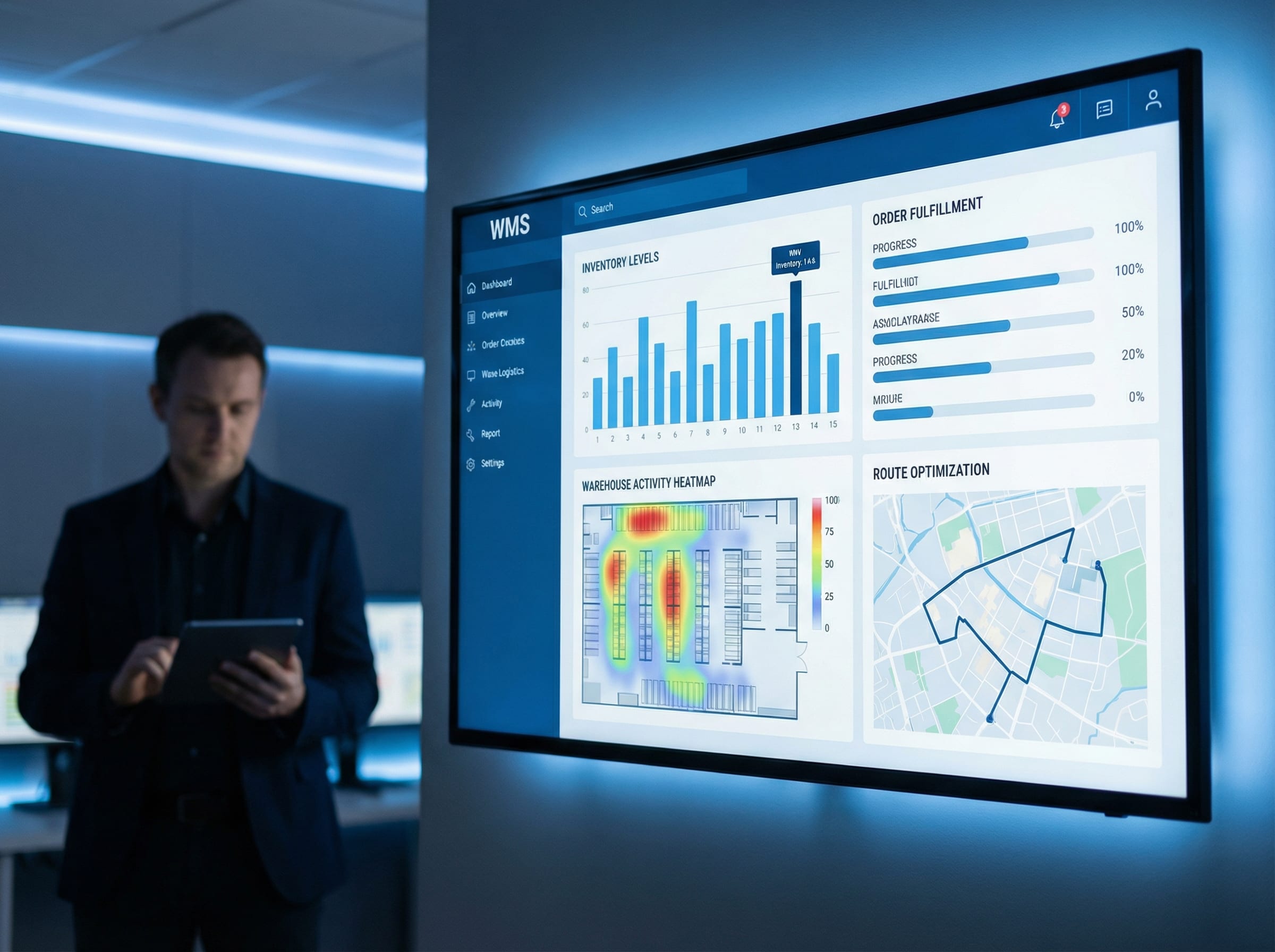
Modern warehouse management systems have evolved from static databases into dynamic AI-layered control centers. They adjust workforce assignments, identify bottlenecks, and coordinate dock schedules in real-time. Transport management systems now use Digital Freight Matching to automate capacity allocation and reduce empty miles.

Modern warehouse management system dashboard showing real-time inventory levels and route optimization

AI & Agentic Automation

The biggest technological leap in 2025–2026 is the transition from predictive AI to agentic AI — autonomous decision-making systems. Machine learning algorithms now predict demand patterns with up to 35% greater accuracy. AI engines process data from WMS, TMS, and IoT devices to automatically reroute shipments, reassign labor, and adjust dock schedules without human intervention. A telling statistic: 74% of shippers state they would switch 3PL providers to access better AI capabilities.

Warehouse Robotics & IoT

The warehouse robotics market reached $9.33 billion in 2025 and is projected to hit $21 billion by 2030. Robotics are deployed across more than 63% of 3PL hubs, improving operational accuracy by 41% and lowering accident rates by 28%. Autonomous Mobile Robots (AMRs) and cobots have transitioned from pilot programs to core warehouse infrastructure. Meanwhile, IoT sensors monitor location, temperature, humidity, and shock in real-time — crucial for cold chain and pharmaceutical logistics.

The UAE & Middle East 3PL Market

The UAE is not just a logistics hub — it is the logistics hub for the Middle East, South Asia, and East Africa. With world-class port infrastructure, free zone tax advantages, and a government actively investing in non-oil trade diversification through “We the UAE 2031,” the country offers a uniquely favorable environment for 3PL operations.

“The UAE e-commerce market is projected to reach $21.18 billion by 2030, growing at 11.5% CAGR. Dubai alone captures roughly 60% of the national e-commerce market — and this growth is the primary engine driving 3PL demand across the region.”

Free Zone Advantages

Dubai’s free zones offer compelling incentives for logistics businesses: 100% foreign ownership, zero corporate and personal income taxes, full repatriation of capital and profits, and zero import/export duties on goods transiting through zones. DAFZA provides direct links to Dubai International Airport for air freight, while JAFZA is adjacent to Jebel Ali Port — one of the world’s largest seaports — enabling seamless “sea-air” transit.

E-Commerce Driving 3PL Demand

The Middle Eastern e-commerce market is projected to top $37 billion, growing at roughly 20% annually. UAE and Saudi Arabia lead the GCC with e-commerce penetration rates of 46% and 35%, respectively. GCC consumers now expect same-day or next-day deliveries, real-time tracking, and hassle-free returns — capabilities that only a mature 3PL infrastructure can deliver at scale. Seasonal spikes during Ramadan and White Friday drive especially heavy reliance on flexible 3PL capacity.

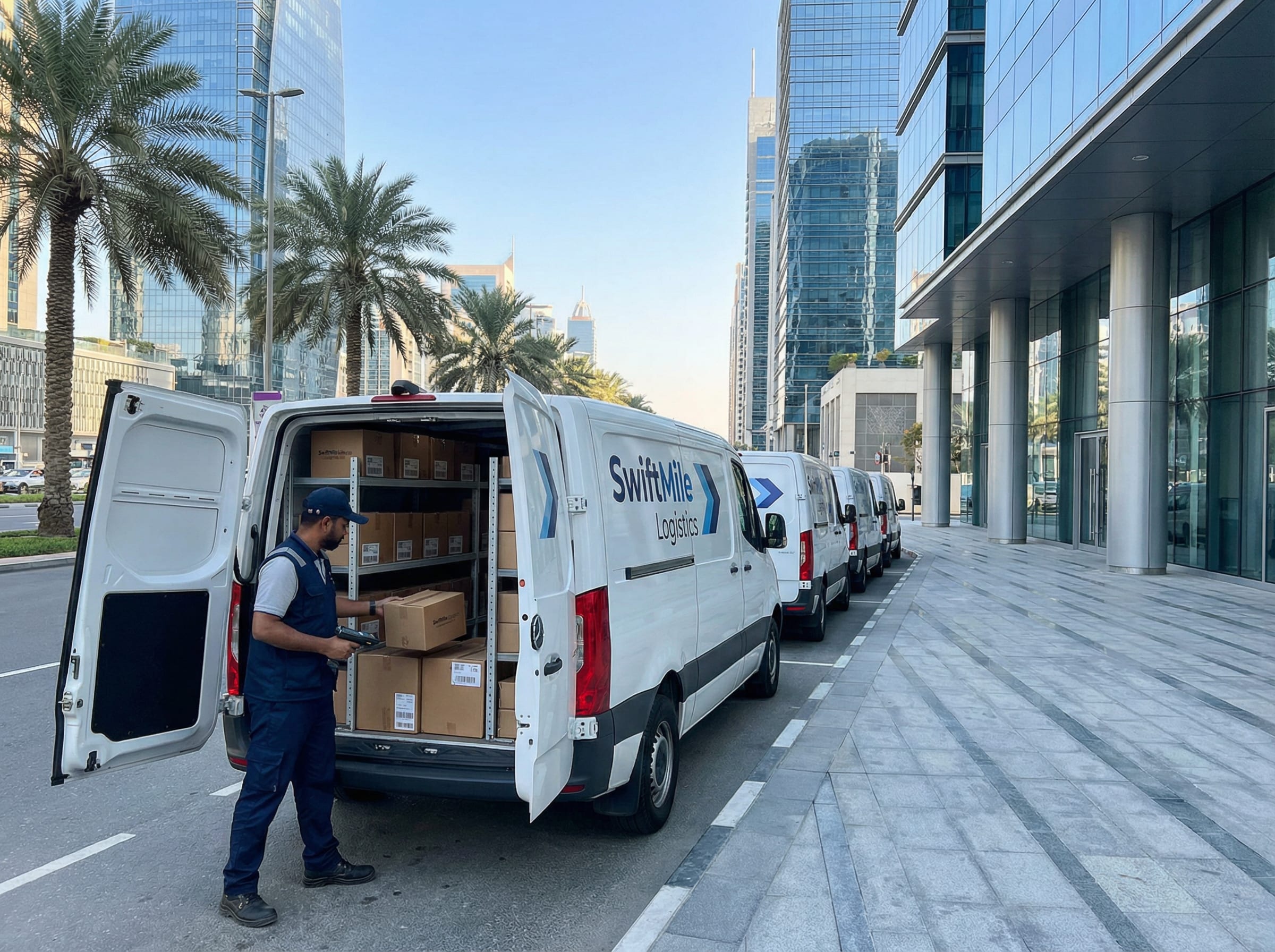
Fleet of delivery vans at a modern distribution hub in a Middle Eastern urban district
Last-mile delivery fleets operating from urban micro-hubs are the visible face of 3PL operations across UAE cities — meeting consumer demand for same-day and next-day delivery.

How to Evaluate a 3PL Provider

Choosing a 3PL is one of the most consequential operational decisions a growing business makes. A bad fit costs far more than money — it costs customer trust, delivery reliability, and months of lost momentum. Use this weighted evaluation framework to compare providers systematically.

Technology & Integration
WMS quality, API connectivity, real-time tracking, platform integrations
25%
SLA Guarantees & Accountability
Contractual commitments on accuracy, shipping speed, and financial penalties
20%
Scalability & Flexibility
Peak season capacity, multi-location options, contract terms
20%
Pricing Transparency
Fully itemized quotes, no hidden fees, clear volume discount tiers
15%
Facility & Location Quality
Warehouse conditions, security, proximity to customer base, climate control
10%
Industry Experience & References
Track record in your product category, verifiable client references
10%

Critical KPIs to Track After Onboarding

Once live, monitor these metrics monthly: Order Accuracy Rate (target: >99.5%), On-Time Shipping Rate (target: >99%), Dock-to-Stock Time (target: 24–48 hours max), Inventory Accuracy (target: >99%), Return Processing Time (target: 48–72 hours), and Cost Per Order (CPO) trending over time. If any metric drifts more than 5% below target for two consecutive months, escalate to your account manager immediately.

Implementation Roadmap

A typical 3PL implementation takes 4–12 weeks from contract signing to full go-live, depending on complexity. Rushing this process is one of the most common — and most expensive — mistakes businesses make. Follow this proven timeline to get it right the first time.

Weeks 1–2
Discovery & Contract
Finalize pricing, SLAs, and payment terms. Assign implementation managers on both sides. Establish SOPs for receiving, packaging, branding, and returns. Define communication cadence and escalation paths.
Weeks 3–5
IT Integration & Testing
Connect your sales channels (Shopify, WooCommerce, ERP) to the 3PL’s WMS via API or EDI. Run sandbox testing with fake orders to verify inventory sync, order flow, tracking updates, and returns processing. Fix integration bugs before any real inventory ships.
Weeks 6–7
Inventory Transfer & Setup
Ship inventory to the 3PL warehouse. The provider receives, counts, and bins each SKU into designated storage locations. Run a full cycle count to confirm inventory accuracy before going live. This step is often underestimated — allocate extra time for multi-SKU catalogs.
Week 8
Soft Launch & Go-Live
Route a small percentage of orders (10–20%) through the 3PL while monitoring accuracy, shipping speed, and customer feedback. Once KPIs are stable, ramp to full volume. Keep your old fulfillment path live as a fallback until you are confident in the new one.
Weeks 9–10
Hyper-Care & Optimization
Daily check-ins with your account manager. Monitor all KPIs against SLA targets. Fix any remaining integration bugs. Review the first full billing cycle for unexpected charges. After this phase, transition to weekly or biweekly review cadence.

Red Flags When Choosing a 3PL

Not all 3PL providers are created equal. Some warning signs are subtle during the sales process but become expensive problems after you have transferred your inventory. Watch for these red flags during evaluation and early onboarding.

!

“Black Box” Pricing

If the quote is overly complex, difficult to parse, or buries accessorial fees in fine print, expect bill shock. Reputable providers give clear, fully itemized pricing upfront.

!

Refusal to Offer Penalty SLAs

A provider unwilling to accept financial consequences for missed accuracy or shipping targets is signaling low confidence in their own operations. Strong providers welcome accountability.

!

High Employee Turnover

If the warehouse relies heavily on temporary labor with no retention strategy, expect inconsistent pick accuracy and higher error rates. Ask about their turnover rate and training programs.

!

Outdated Technology

Manual spreadsheets, paper pick-lists, no real-time inventory dashboard, and no API connectivity are disqualifiers in 2026. If their system cannot integrate with your sales channels, walk away.

!

No Dedicated Account Manager

Generic support tickets instead of a named contact with direct access means your issues will be deprioritized. You need a person who knows your account, not a ticketing queue.

!

Poor Facility Conditions

Dirty warehouses, blocked aisles, weak security, and no climate control are visible symptoms of operational neglect. Always visit the facility in person before signing.

Key Takeaways

What You Need to Remember

  • The global 3PL market exceeds $1.3 trillion and is growing at 8–10% annually — this is not a niche, it is a core business function
  • The UAE logistics market ($54.5–65B) and Middle East 3PL market ($86B) represent some of the fastest-growing opportunities in the world
  • Technology is the differentiator: 74% of shippers would switch 3PLs for better AI capabilities. Evaluate WMS, TMS, and API quality before pricing
  • Fully landed cost per order ($8–$15 domestic, $11–$19 cross-border) is the metric that matters — not line-item rates
  • Implementation takes 4–12 weeks when done properly. Cutting corners on integration testing and inventory transfer creates months of problems
  • Use weighted evaluation criteria (technology 25%, SLAs 20%, scalability 20%) to compare providers objectively, not just on price
  • Watch for red flags: black-box pricing, no penalty SLAs, outdated technology, and no dedicated account manager are all disqualifiers
  • Dubai’s free zones offer 100% foreign ownership, zero taxes, and world-class port infrastructure — making the UAE one of the best markets to launch 3PL-powered operations
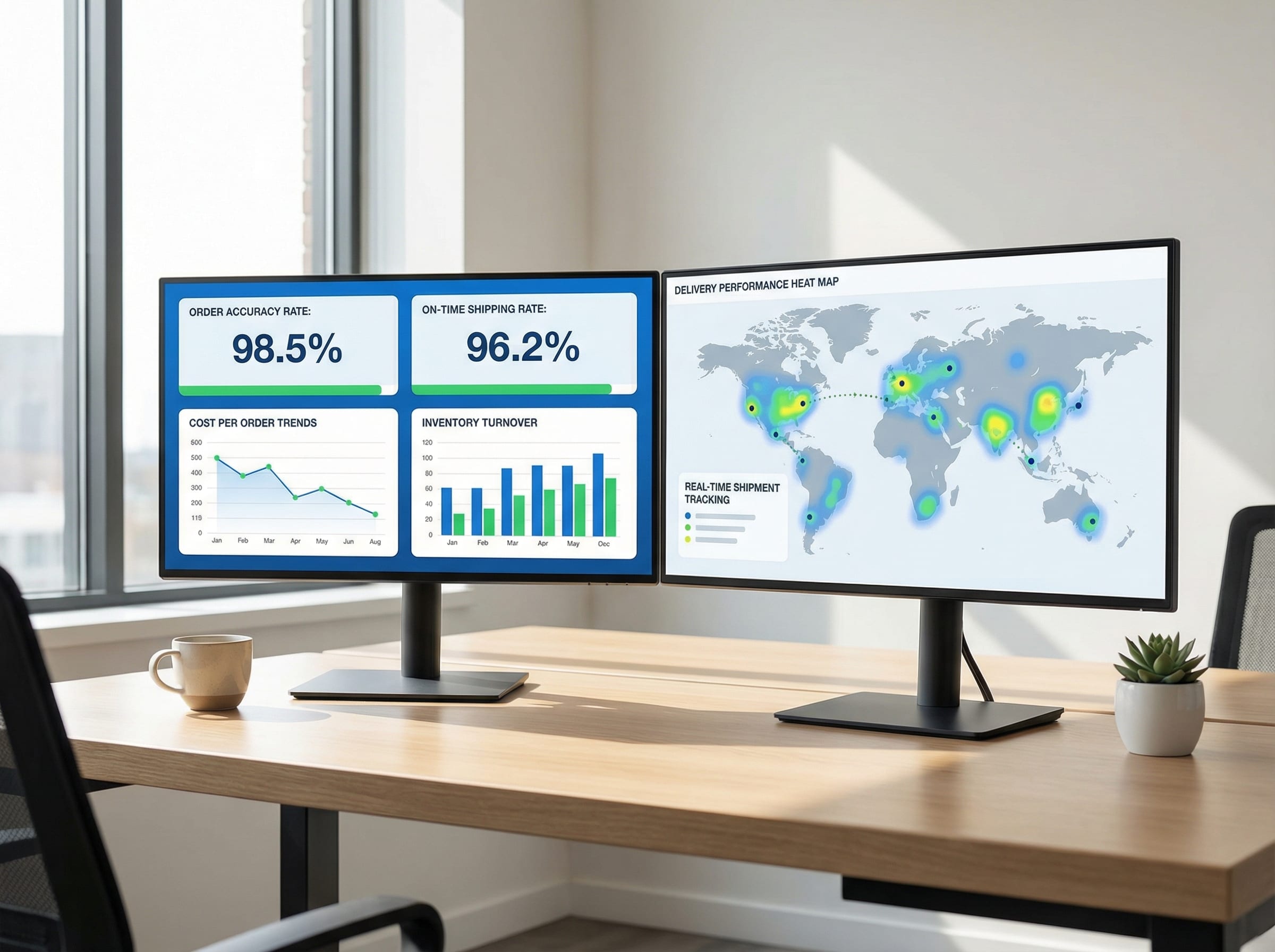
Logistics analytics dashboard showing KPI performance metrics and delivery heat maps on dual monitors
Tracking KPIs like order accuracy, on-time shipping rate, and cost per order is essential for holding your 3PL partner accountable and optimizing operations over time.

Frequently Asked Questions

A 3PL provider handles physical logistics operations (warehousing, fulfillment, transportation). A 4PL is a “lead logistics provider” that manages and orchestrates multiple 3PLs on your behalf — they own no physical assets but provide strategic oversight of your entire supply chain. Think of 3PL as execution and 4PL as orchestration.
The fully landed cost per order for domestic shipments typically ranges from $8 to $15, including storage, pick and pack, and shipping. Cross-border orders run $11–$19. These figures vary based on product size, weight, order complexity, and volume. Always evaluate on fully landed cost — not individual line items.
Key triggers include: processing more than 200–500 orders per month, running out of warehouse space, fulfillment errors exceeding 1%, expanding to new geographies, or spending more than 20% of your time on logistics rather than core business. If logistics is becoming a bottleneck rather than a support function, it is time to evaluate 3PL partners.
The six critical KPIs are: Order Accuracy Rate (>99.5%), On-Time Shipping Rate (>99%), Dock-to-Stock Time (24–48 hours), Inventory Accuracy (>99%), Return Processing Time (48–72 hours), and Cost Per Order trending over time. Monitor these monthly and escalate if any metric drifts more than 5% below target for two consecutive months.
A typical implementation takes 4–12 weeks: 2 weeks for contract and SOPs, 2–3 weeks for IT integration and testing, 1–2 weeks for inventory transfer, 1 week for soft launch, and 1–2 weeks for hyper-care. More complex setups (multi-channel, international, cold chain) can take up to 16 weeks.
Yes. Dubai’s free zones (JAFZA, DAFZA, DMCC) offer 100% foreign ownership, zero corporate taxes, full profit repatriation, and zero import/export duties for goods in transit. JAFZA is adjacent to Jebel Ali Port and DAFZA links to Dubai International Airport, enabling seamless multi-modal logistics. These zones are among the most competitive logistics environments globally.
Over 90% of Fortune 500 companies use at least one 3PL provider. Globally, more than 62% of enterprises outsource at least one logistics function, and 37–60% of e-commerce companies outsource some or all order fulfillment. The trend is accelerating — 55% of companies plan to increase their outsourcing in the near future.
Yes. Most modern 3PLs offer reverse logistics as a core service. This includes receiving returned products, inspecting for damage, processing refunds or exchanges, and determining disposition (restocking, repair, recycling, or disposal). For e-commerce brands with return rates of 15–30%, outsourcing reverse logistics can significantly reduce costs and speed up the customer refund cycle.

Edit Section


Let's talk scale.

Whether you're looking to optimize delivery, centralize operations, or unlock new revenue — Axiom X is your growth partner.