
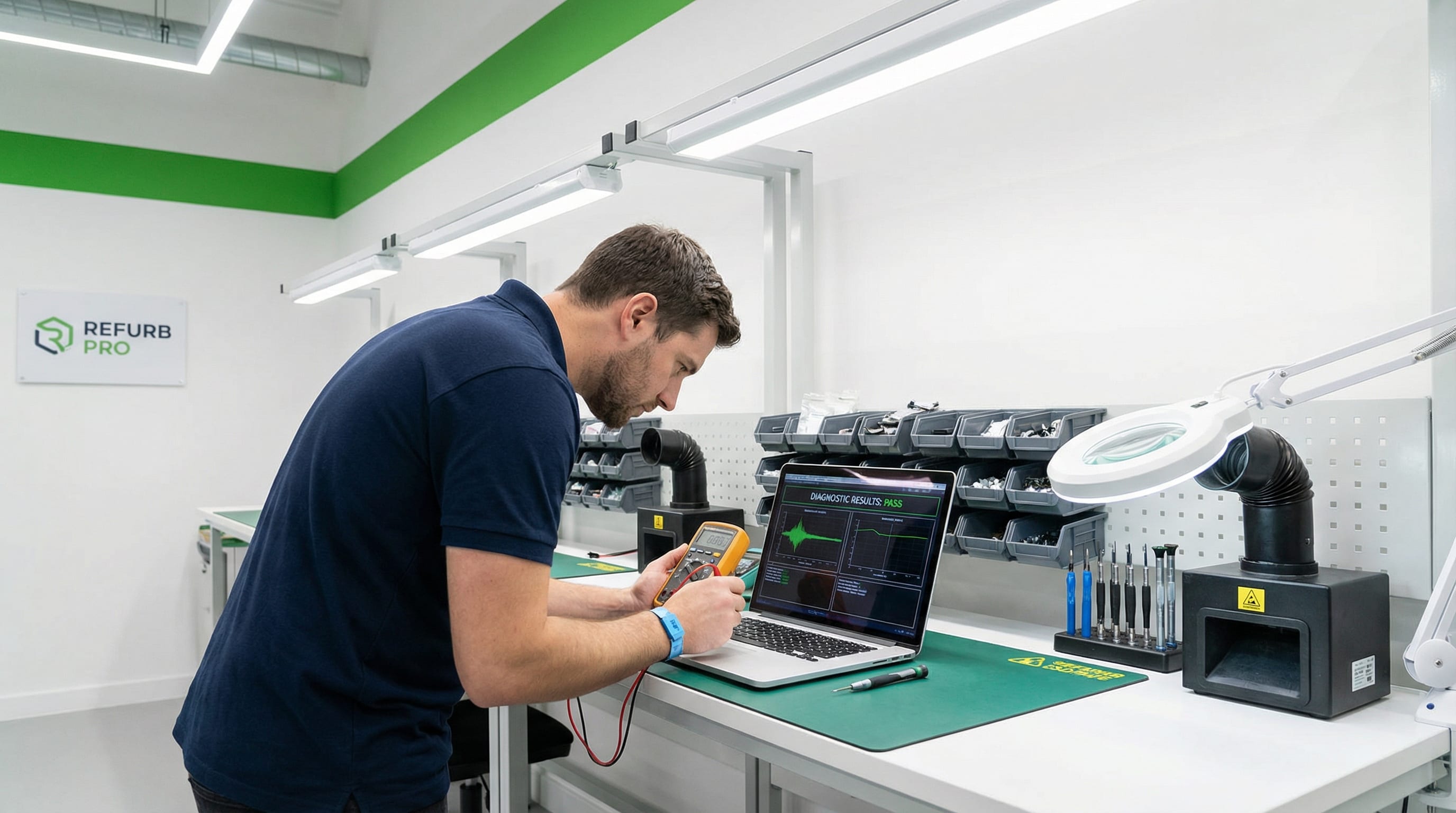
Refurbishment Services: The Complete Guide to Turning Returns Into Revenue
78% of consumers now buy refurbished electronics. With 62 million tonnes of e-waste generated annually and a $32 billion ITAD market, refurbishment isn’t a side hustle — it’s a supply chain imperative.
In This Guide
- What Are Refurbishment Services?
- The 7-Step Refurbishment Workflow
- Refurb vs Repair vs Remanufacturing
- The Quality Grading System
- The Circular Economy Revolution
- Industries Using Refurbishment
- Technology Powering Refurbishment
- The UAE Refurbishment Landscape
- ROI and Business Case
- FAQ & How to Choose
What Are Refurbishment Services?
Refurbishment services sit at the intersection of reverse logistics, value recovery, and sustainability — and in 2026, they represent one of the fastest-growing segments in the global supply chain industry. A refurbishment service takes a product that has been returned, traded in, or identified as surplus, and transforms it through a systematic process of inspection, repair, cleaning, testing, and repackaging into an item that can re-enter commerce at a certified quality level. Unlike simple resale of “used” goods, professional refurbishment adds measurable, documented value: a graded condition, a warranty, and in many cases, a certification that the product meets or approaches original equipment manufacturer (OEM) specifications.
For 3PLs and logistics operators, refurbishment is no longer a peripheral offering. As e-commerce return rates for electronics hover between 15 and 25 percent, and as brand owners face growing environmental, social, and governance (ESG) obligations, the ability to recover, grade, repair, and recommerce returned inventory has become a core competitive differentiator. Companies that can execute refurbishment at scale — with documented audit trails, certified data erasure, and reliable grade accuracy — are commanding premium contracts from retailers, OEMs, telecom operators, and government agencies alike.
Refurbishment restores products to like-new condition through inspection, testing, repair, cleaning, and repackaging — with each step documented and traceable.
Unlike simple resale, refurbishment adds documented value: grading, warranty coverage, OEM-aligned certification, eco-packaging, and a verified audit trail that commands buyer trust.
The global IT Asset Disposition (ITAD) market reached $32.41 billion in 2025, growing at 10.2% CAGR — driven by electronics proliferation, ESG mandates, and the circular economy transition.
The term “refurbishment” is often used loosely to mean anything from a quick clean to a full rebuild. In professional logistics practice, it carries a precise meaning: a structured, repeatable process that applies defined quality standards and outputs a product in a documented condition grade. This guide uses the professional definition throughout, covering the full spectrum from triage and data security through recommerce and recycling.
The 7-Step Refurbishment Workflow
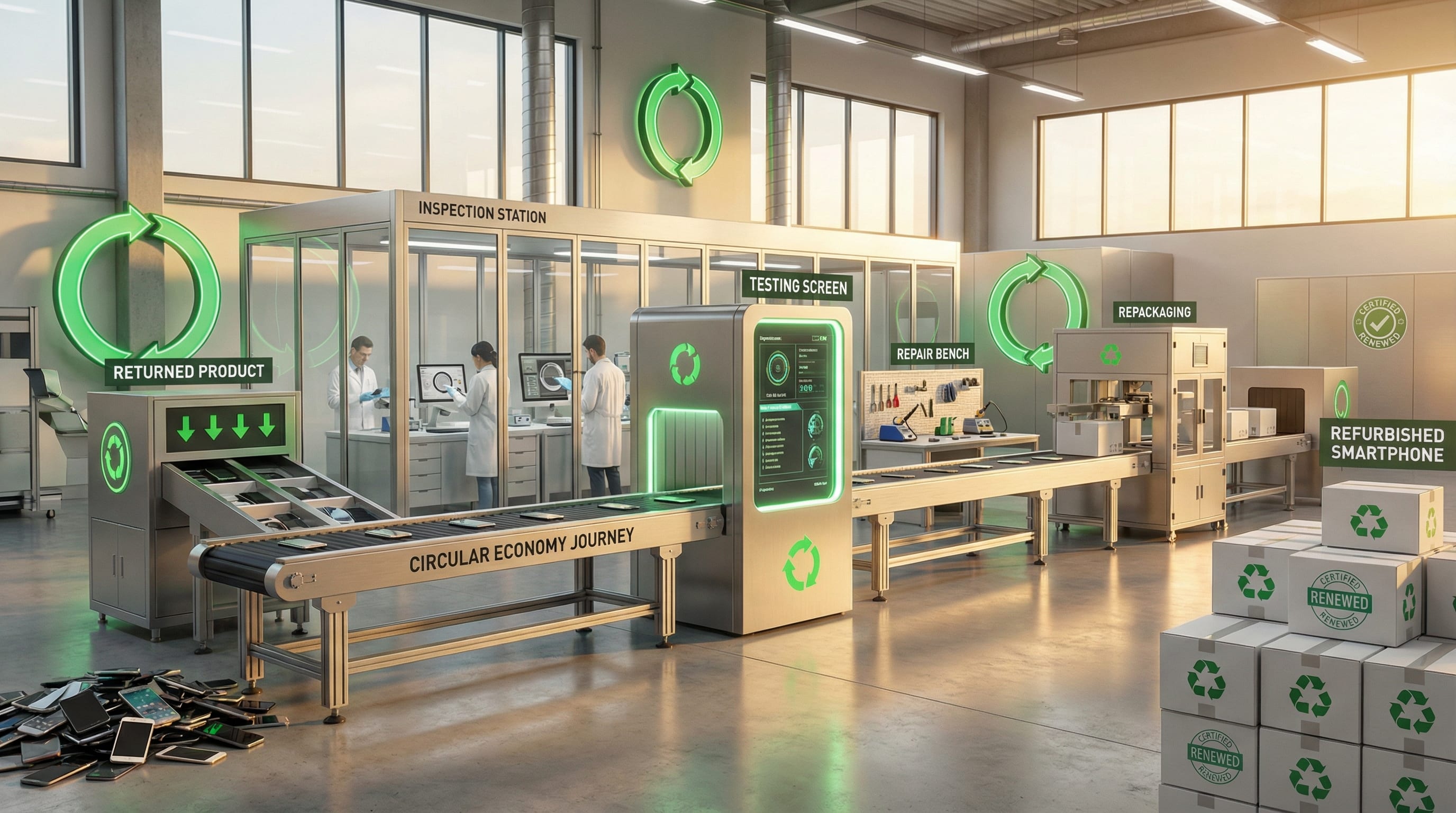
A professional refurbishment operation is not a simple repair shop. It is a structured manufacturing-like workflow with defined inputs, quality gates, and outputs. The most effective 3PL refurbishment services follow a seven-stage process that begins before a product arrives at the facility and ends only once the item is either recommerced or responsibly recycled. Click each step to expand the detail.
Refurbishment vs Repair vs Remanufacturing
These three terms are frequently conflated in sales literature, but they represent fundamentally different processes with different costs, outputs, and appropriate use cases. Understanding the distinction is critical for procurement teams, brand managers, and logistics operators when specifying a service and managing buyer expectations downstream.
- Addresses a single identified defect
- Minimal additional processing or testing
- Original cosmetic grade maintained (not improved)
- No full functional diagnostic run
- Fastest turnaround, lowest cost per unit
- Typically no warranty upgrade
- Full inspection, repair, clean, regrade, repackage
- 100+ point functional diagnostic
- Cosmetic improvement included
- Like-new output with documented grade
- Warranty issued (grade-dependent)
- Certified data erasure for data-bearing devices
- Full disassembly to raw components
- Rebuild to original OEM specifications
- All wear parts replaced as standard
- New product warranty issued
- Highest cost, longest processing time
- Regulatory & OEM certification required
For consumer electronics and IT assets — the dominant categories in UAE refurbishment operations — refurbishment is the appropriate standard in the vast majority of cases. Repair is used for units still under warranty where the goal is simply to restore function rather than add recommerce value. Remanufacturing is typically reserved for high-value industrial machinery, medical imaging equipment, and precision automotive components where OEM rebuild specs are both achievable and contractually required.
When evaluating a 3PL refurbishment partner, always ask specifically which of these three processes is being applied to which categories in your inventory. “We refurbish everything” is a red flag: a professional operation segments by product type, condition, and economics, applying the most appropriate process to each unit.
The Quality Grading System
Standardised grading is the backbone of a trustworthy refurbishment operation. Without a documented, reproducible grading framework, buyers cannot price inventory accurately, sellers cannot guarantee quality to their recommerce channels, and the entire value recovery exercise becomes a liability rather than an asset. The industry-standard A/B/C/D grading system (sometimes extended to Grade F for beyond-economic-repair) is used by major OEMs, telco operators, and ITAD firms worldwide. Here is how each grade maps to condition, battery health, warranty, and resale value.
Grade A — Excellent / Like New
- 85%+ battery health
- Flawless cosmetics (no visible wear)
- Full functional pass (100+ checks)
- 12-month warranty standard
- OEM-style packaging eligible
Grade B — Good / Light Wear
- 75%+ battery health
- Minor cosmetic wear (light scratches)
- Full functional pass
- 12-month warranty standard
- Plain-box or grade-labelled packaging
Grade C — Fair / Visible Wear
- 60%+ battery health
- Visible cosmetic wear (scratches, minor dents)
- Full functional pass
- 6-month warranty standard
- Plain-box packaging
Grade D — Salvage / Parts Only
- Non-functional or below battery threshold
- Significant cosmetic damage
- Routed to parts harvesting or recycling
- No warranty issued
- Not sold as functional units
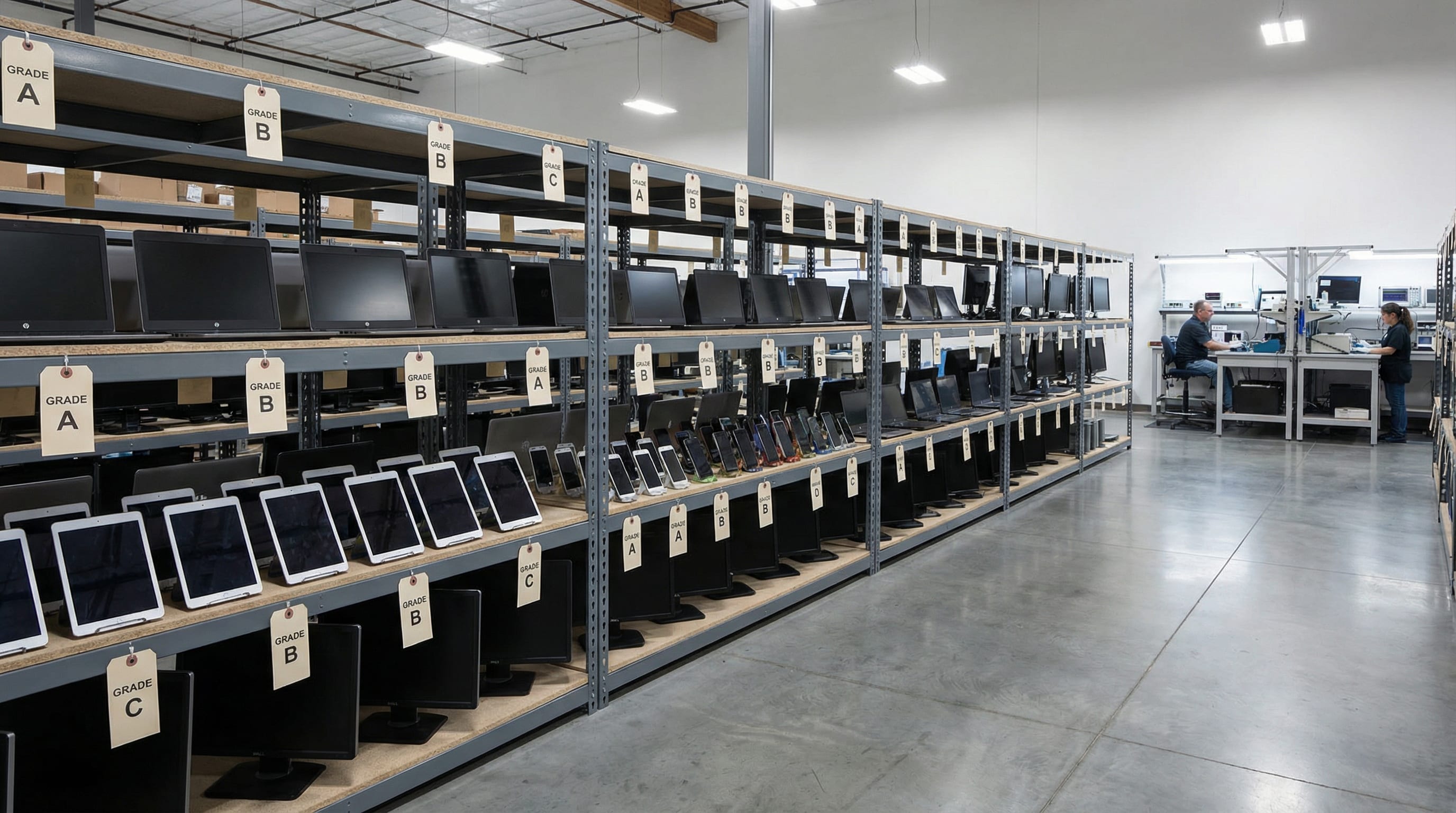
It is worth noting that grading standards are not fully universal — different platforms and programmes use slight variations (e.g., Grade 1/2/3, or Pristine/Good/Fair). When contracting a 3PL refurbishment partner, insist on a written grading standard with photographic examples for each grade threshold. This eliminates grade disputes downstream and protects both parties when inventory is sold into secondary markets.
The Circular Economy Revolution
The case for refurbishment is not just commercial — it is environmental and increasingly regulatory. The world generated 62 million tonnes of e-waste in 2023, a figure growing at roughly 2.5 million tonnes per year. Yet only 22.3% of that material is formally collected and recycled, meaning that more than three-quarters of the world’s discarded electronics — containing recoverable gold, silver, copper, platinum, and dozens of rare earth elements — ends up in landfills, informal dumps, or illegal processing sites. The cost is both environmental and economic: the UN estimates that $62.5 billion in recoverable raw materials is lost annually to inadequate e-waste management.
The UAE has positioned itself as a regional leader in circular economy transition. The UAE Circular Economy Policy 2031, launched by the Ministry of Climate Change and Environment, sets binding targets across four sectors: food, manufacturing, infrastructure, and consumer goods. The e-waste component of this policy directly incentivises refurbishment operations: companies operating in designated free zones that can demonstrate certified refurbishment and recycling activity qualify for regulatory benefits and, increasingly, for preferential scoring in government procurement tenders.
The Enviroserve facility in Dubai Industrial City (DIC) is the UAE’s most advanced e-waste processing operation, holding both R2v3 and e-Stewards certifications. It processes over 10,000 tonnes of e-waste annually, recovering materials worth tens of millions of dollars that would otherwise be lost. 3PL operators partnering with Enviroserve for their Grade D and parts-harvested waste stream can offer clients a fully closed-loop refurbishment service — from return through recommerce to certified recycling — backed by auditable documentation at every stage.
Industries Using Refurbishment
Refurbishment is not confined to consumer electronics. As supply chains have grown more complex and ESG obligations more stringent, a widening range of industries has integrated professional refurbishment into their reverse logistics programmes. The six sectors below represent the largest and fastest-growing applications in the UAE and broader GCC market.
Consumer Electronics
Smartphones, laptops, tablets, and wearables. The highest-volume refurbishment category globally, driven by short upgrade cycles, high return rates, and robust secondary market demand from emerging economies.
10.2% CAGR — UAE smartphone refurb $2.5B by 2030IT Assets (ITAD)
Servers, desktops, networking equipment, storage arrays. Data security is paramount; certified erasure is non-negotiable. Enterprise and government clients require audit trails for compliance.
$375M UAE ITAD market — data security criticalE-Commerce Returns
Consumer goods returned through online retail channels. With 20-30% return rates across electronics and fashion, brands are investing in refurbishment as a core value recovery mechanism rather than writing off returned stock.
20–30% return rate driving value recovery programmesAutomotive Parts
Engines, transmissions, alternators, starter motors, and ECUs. OEM remanufacturing programmes in this sector are mature and well-regulated, with remanufactured parts often carrying the same warranty as new components.
OEM remanufacturing programmes — warranty equivalent to newMedical Devices
Imaging equipment, patient monitors, surgical tools, and diagnostic devices. FDA-cleared remanufacturing and ISO 13485 certification are required. High unit values make refurbishment economically compelling; regulatory compliance makes it complex.
FDA & ISO 13485 compliance — high-value, high-regulationFurniture & Appliances
Hotel renovation cycles, commercial fit-outs, and corporate office refresh programmes generate significant volumes of serviceable furniture and white goods. Refurbishment enables hospitality operators to recover value and meet sustainability reporting requirements.
Hospitality sector driving circular procurement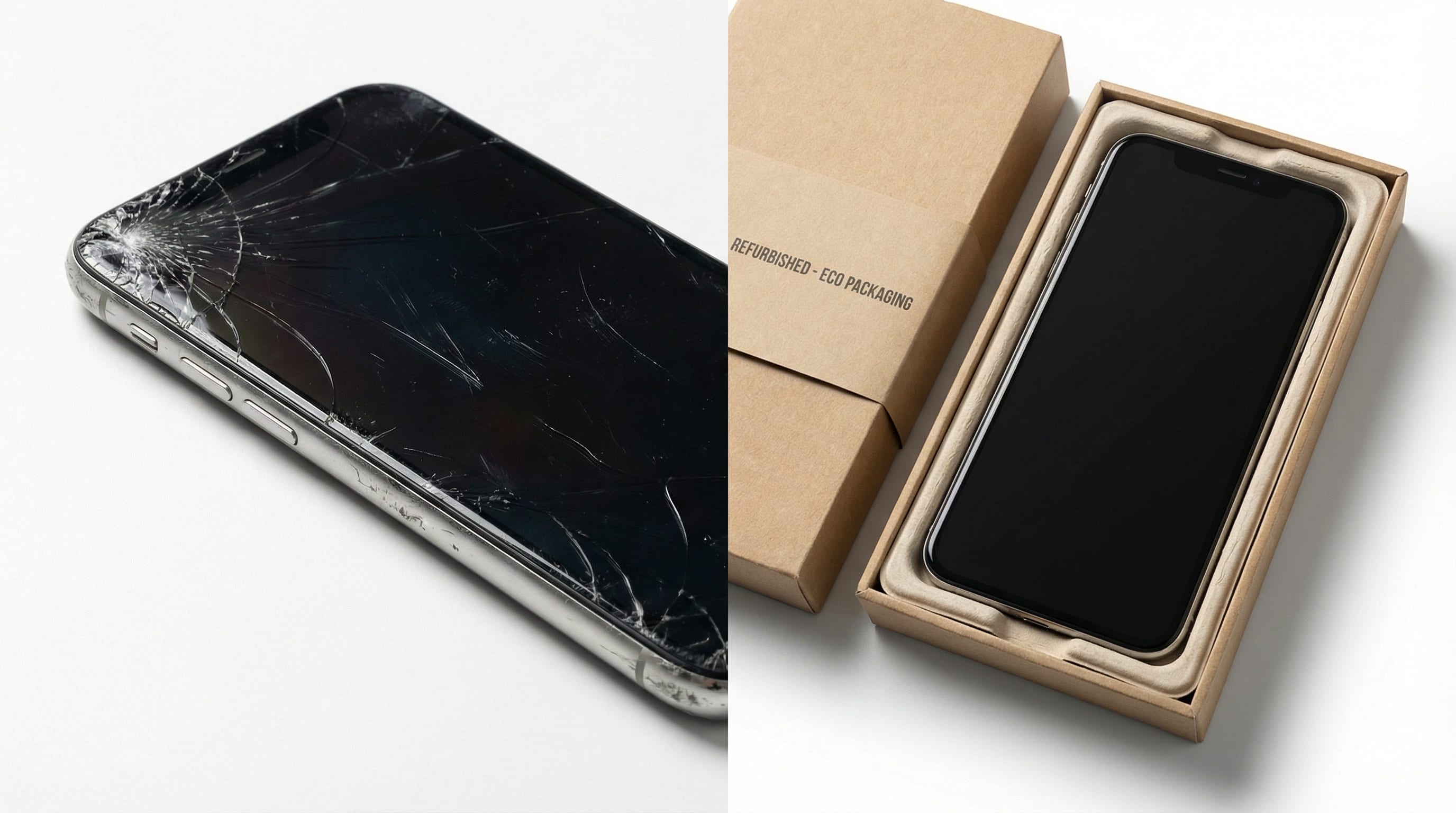
Technology Powering Modern Refurbishment
The refurbishment industry has undergone a profound technological transformation in the past five years. What was once a largely manual, labour-intensive process — dependent on individual technician skill and judgement — is now increasingly automated, data-driven, and traceable from the moment a return is initiated to the point of recommerce or recycling. The chart below shows the current technology adoption mix across professional refurbishment operations globally, based on industry survey data from 2025.
AI-Powered Visual Inspection
Computer vision systems trained on tens of millions of device images now perform cosmetic grading with greater consistency than human technicians. Models from companies such as Refurbed, Back Market’s internal systems, and specialist providers like Allcot can identify scratches, cracks, dents, and discolouration at a sub-millimetre resolution, assign a draft grade within seconds, and flag anomalies for human review. This eliminates grading subjectivity — a major source of dispute between sellers and their recommerce platforms — and allows grade accuracy rates above 97%.
IoT Diagnostics & Automated Test Rigs
Automated test stations connect to devices via USB, lightning, or wireless protocols and run structured diagnostic suites in parallel: battery health assessment, screen touch accuracy, camera sensor tests, speaker and microphone checks, cellular and Wi-Fi connectivity validation, and biometric sensor verification. A full 100+ point diagnostic that takes a human technician 15–20 minutes can be completed in 90 seconds on a modern automated rig, with results logged directly to the WMS for traceability.
Blockchain Product Passports
Leading ITAD operators are piloting blockchain-based “product passports” that record every event in a device’s lifecycle — manufacture, sale, return, grading, repair, recommerce — on an immutable ledger. These passports, aligned with the EU’s Digital Product Passport (DPP) regulation effective from 2026, give buyers of refurbished goods verifiable provenance data that dramatically increases consumer confidence and allows premium pricing on recommerce channels.
The UAE Refurbishment Landscape
The UAE has emerged as the GCC hub for electronics refurbishment, driven by a combination of policy intent, infrastructure advantage, and strategic geography. Dubai’s free zones — particularly JAFZA (Jebel Ali Free Zone) and Dubai Airport Free Zone (DAFZA) — offer refurbishment operators zero corporate tax (subject to qualifying income rules under UAE CT law), 100% foreign ownership, full profit repatriation, and streamlined import/export procedures for returned and refurbished goods.
Enviroserve — The UAE’s Anchor E-Waste Facility
Enviroserve Dubai, located in Dubai Industrial City, is the largest integrated e-waste processing facility in the Middle East. Holding both R2v3 (Responsible Recycling) and e-Stewards certifications, it provides refurbishment operators with a compliant downstream partner for Grade D inventory and post-harvest waste streams. Certificates of recycling issued by Enviroserve are accepted by multinational brand partners and government clients as evidence of responsible disposal, satisfying ESG reporting requirements and enabling participation in tenders that mandate circular economy compliance.
JAFZA: The Natural Home for Refurbishment Operations
Jebel Ali Free Zone offers refurbishment operators a unique combination of advantages. The zone’s adjacency to Jebel Ali Port — handling 15.5 million TEU annually — means inbound returned goods from global markets and outbound refurbished inventory to regional buyers can both be handled with minimal dwell time and customs complexity. JAFZA’s bonded zone status allows goods to be imported, processed, and re-exported without incurring UAE customs duty, which is a significant cost advantage for operators handling high volumes of cross-border returns. Combined with the zone’s world-class warehousing infrastructure and connectivity to Al Maktoum International Airport, JAFZA provides a refurbishment location that no other regional hub can match.
ROI and Business Case
The commercial argument for investing in professional refurbishment is no longer speculative. Brands and operators that have made the transition from write-off-and-dispose to grade-repair-recommerce have documented consistent, measurable returns. The three-phase case study framework below illustrates the typical journey from a return management problem to a profitable reverse logistics operation.
- 20–30% e-commerce return rates creating large volumes of unprocessed inventory
- Returned goods written off at 0–10% of cost, dragging gross margin
- Storage costs mounting for unprocessed returns in warehouse dead zones
- Environmental liability from informal or undocumented disposal
- Brand risk from returned devices resold without data erasure
- ESG reporting gaps creating regulatory exposure
- Partner with a certified 3PL refurbishment operator in JAFZA or Dubai Industrial City
- Implement AI-assisted grading and automated diagnostic testing
- Deploy certified data erasure for all data-bearing devices
- Establish tiered recommerce channels: OEM programme, marketplace, B2B bulk
- Connect Grade D waste stream to certified e-waste recycler (R2v3 / e-Stewards)
- Generate ESG documentation: certificates of erasure, recycling, and disposition
- 40–60% value recovery on returned inventory vs. 0–10% write-off baseline
- 80% reduction in landfill waste from returns processing
- New certified-refurbished revenue stream from recommerce channels
- Full ESG documentation enabling sustainability reporting and tender eligibility
- Data breach risk eliminated via certified erasure programme
- 3PL handling eliminates internal resource burden — no capex required
The financial impact is most visible in the gross margin line. A brand writing off returned electronics at 5 cents on the dollar is forfeiting 40–55 cents that a professional refurbishment partner can deliver. For a business processing 50,000 returned units per year at an average original cost of AED 800 per unit, the difference between write-off and refurbishment value recovery is in the range of AED 14–20 million annually — a number that makes the unit economics of 3PL refurbishment services immediately compelling even at processing fees of AED 50–150 per unit.
Beyond the direct value recovery, the ESG benefits are increasingly monetisable. Government tenders in the UAE, Saudi Arabia, and Qatar are now weighting sustainability credentials in procurement scoring. Brands that can demonstrate a certified circular supply chain — with audit trails from return through recommerce or recycling — are commanding a competitive advantage in government business that their non-compliant competitors cannot access.
Frequently Asked Questions
Refurbishment raises distinct questions depending on whether you are approaching it as an operations manager, a quality assurance lead, or a business decision-maker. The tabbed FAQ below addresses the most common queries in each category.
Ready to Turn Your Returns Into Revenue?
Axiom X operates certified refurbishment and ITAD services from Dubai, serving brands, retailers, and enterprises across the UAE and GCC. Talk to our team about a custom refurbishment programme for your inventory.
Get a Refurbishment QuoteSources & References
- Global E-Waste Monitor 2024. United Nations University / ITU / ISWA. Record 62 million tonnes of e-waste generated in 2023.
- Grand View Research (2025). IT Asset Disposition (ITAD) Market Size & Forecast 2025–2030. Market value $32.41B, CAGR 10.2%.
- IDC Middle East & Africa. (2025). MEA Refurbished Devices Market Report. Dubai redistribution volumes; UAE smartphone refurb trajectory to $2.5B by 2030.
- UAE Ministry of Climate Change and Environment. (2023). UAE Circular Economy Policy 2031. 75% landfill diversion target by 2030.
- Enviroserve Dubai. (2025). Annual Sustainability Report. R2v3 and e-Stewards certification; 10,000+ tonnes annual processing capacity.
- JAFZA Authority. (2025). Free Zone Operational Guide. Bonded zone benefits, import/re-export procedures for refurbishment operators.
- Blancco Technology Group. (2025). Enterprise Data Erasure Standards White Paper. NIST 800-88 and DoD 5220.22-M erasure standards.
- Back Market. (2024). The Refurbished Device Market: Consumer Confidence & Growth Report. 78% consumer openness to refurbished electronics.
- European Commission. (2024). Digital Product Passport (DPP) Regulation — Implementation Timeline. Effective 2026 for electronics.
- Deloitte. (2025). Reverse Logistics Value Recovery: Benchmarks & Best Practices. 40–60% value recovery benchmarks for refurbished electronics.
- UAE Federal Tax Authority. (2025). Corporate Tax Guide for Free Zone Persons. Qualifying income rules for free zone refurbishment operations.
- IDC Worldwide Quarterly Mobile Phone Tracker. (2025). Certified Refurbished vs. Used Device Market Share Analysis. Grade A resale value 85–95% of new retail.
Let's talk scale.
Whether you're looking to optimize delivery, centralize operations, or unlock new revenue — Axiom X is your growth partner.
Our Headquarters
UAE