
Cash on Delivery in the UAE: The Complete Guide for E-Commerce Businesses
COD still captures 31.6% of e-commerce orders — but with 20-30% refusal rates and 14-30 day cash cycles, it’s a double-edged sword. Here’s how to make it work.
In This Guide
COD in the UAE — Still Essential or Fading Fast?
Cash on delivery usage has declined 53% since 2020, yet 71.2% of UAE e-commerce stores still offer it. That paradox tells you everything you need to know about cash on delivery UAE — it is contracting but not collapsing, and removing it entirely from your checkout can cost you orders you cannot afford to lose.
The UAE e-commerce market stands at AED 32.3 billion ($8.8B) as of 2026 and is forecast to reach AED 50.6 billion by 2029. Within that market, COD commands 31.6% of order volume — a share that belies its significantly lower value contribution. Consumers using COD tend to place smaller, lower-AOV orders; the payment method disproportionately represents volume, not revenue.
The data on consumer behavior is instructive: 74% of buyers say they would switch to a card payment if COD were removed, suggesting real underlying willingness to pay digitally. But the operative word is "would" — not "will." Trust gaps, banking exclusion, and habit still anchor a significant cohort to cash. For brands targeting older demographics, first-time buyers, or lower-income segments, COD remains a genuine conversion driver. For digital-native, high-AOV categories, it may be costing more than it earns.
COD vs Digital Payments — The Numbers
Order share and revenue share are two very different metrics, and for COD they diverge sharply. While COD accounts for 31.6% of order volume, it typically represents only 7–10% of order value — reflecting the lower average basket sizes common with cash-paying customers. Cards, by contrast, represent 40–49% of orders but 45–50% of value, driven by higher-AOV purchases where digital trust is established.
The remittance cycle is where COD's operational burden becomes most visible. While card and digital wallet settlements clear within 24–48 hours, COD cash must be physically collected, counted, reconciled, and transferred — a process that takes 14 to 30 days with most logistics providers in the UAE. That gap locks up working capital and can create serious cash flow constraints for high-volume merchants.
| Payment Method | Order Share | Value Share | Success Rate | Remittance Speed |
|---|---|---|---|---|
| COD Cash | 31.6% | 7–10% | 70–80% | 14–30 days |
| Cards (Visa / MC / Amex) | 40–49% | 45–50% | 94% | 24–48 hours |
| Digital Wallets Growing | 15–20% | 20–25% | 96% | Instant |
| BNPL (Tabby / Tamara) | 8–12% | 15–18% | 92% | 24–48 hours |
How COD Works Operationally
Understanding the mechanics of a COD transaction helps you identify exactly where value leaks and where intervention can improve outcomes. The process spans six distinct stages — each carrying its own failure probability and cost implication.
Order Placed & Confirmed
Customer selects COD at checkout. No payment is captured at this stage — the order is booked on credit. Many merchants send an automated WhatsApp or SMS confirmation within minutes to reduce abandonment and verify intent. Unverified COD orders have significantly higher non-delivery rates.
Best practice: confirm within 5 minutes via WhatsAppWarehouse Fulfillment & Dispatch
The order is picked, packed, and handed to the logistics carrier. COD parcels are typically flagged in the WMS so couriers know payment is expected. Packaging costs are already sunk at this stage — a refusal will result in full reverse logistics expense.
Delivery Attempt & Customer Contact
The courier contacts the customer prior to arrival — typically via call or WhatsApp. This contact is the last opportunity to catch phantom or fraudulent orders before delivery cost is fully incurred. Many experienced UAE operators make pre-delivery IVR calls standard for all COD orders.
3 attempts minimum is industry standard in the UAECash Collection at the Door
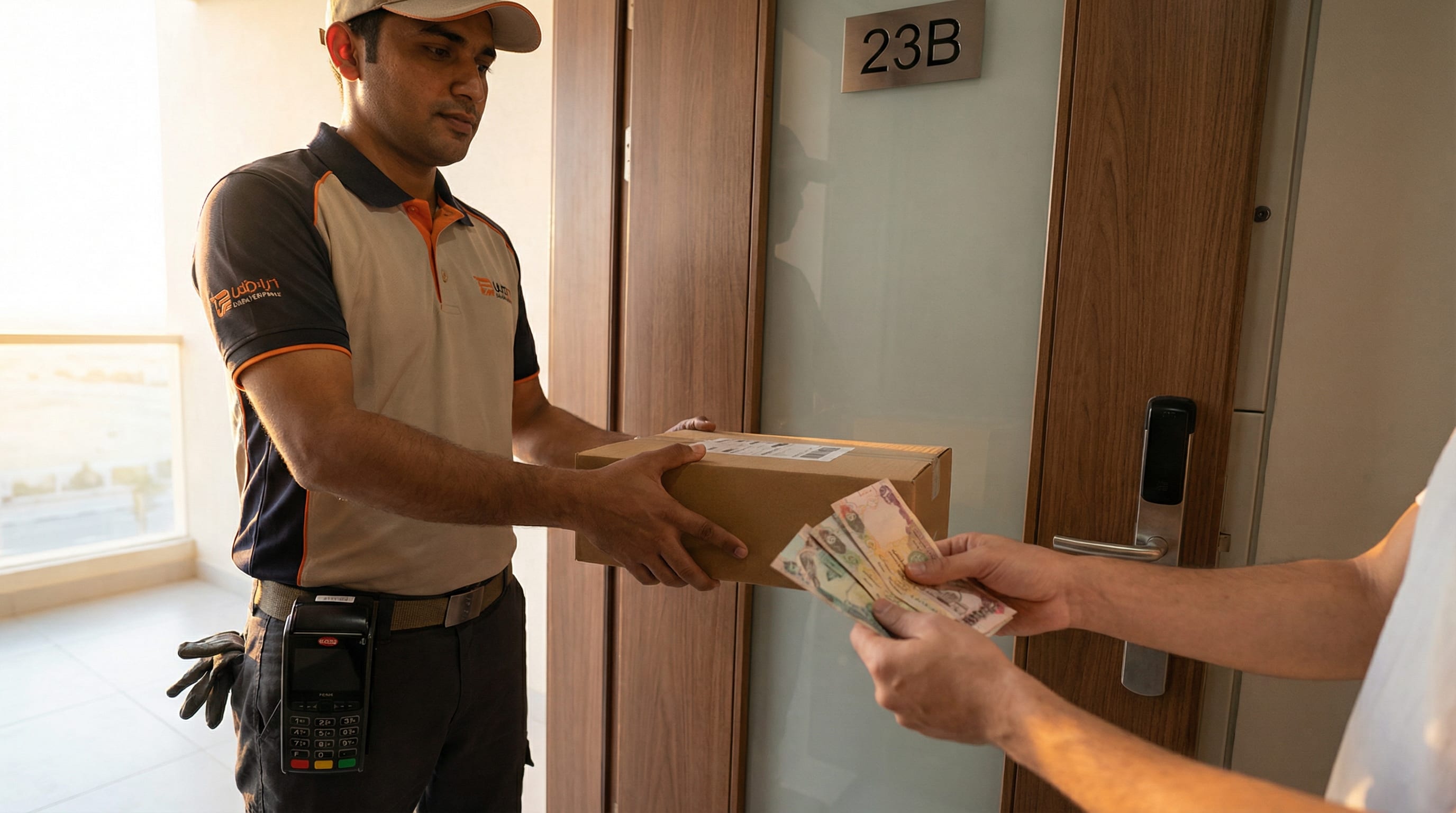
The courier collects the exact order amount in cash, or provides change. Some carriers now equip couriers with mPOS terminals to accept card at the door — a hybrid model that captures customers who are cash-hesitant but still prefer not to pre-pay online.
Cash Reconciliation
Couriers deposit collected cash at the carrier's hub. Finance teams reconcile against delivery manifests. Discrepancies, shortfalls, or missing deposits must be investigated manually — a labor-intensive process at scale. Some carriers offer daily digital reconciliation dashboards to reduce friction.

The Hidden Costs of COD
The surface cost of COD — a handling fee from your logistics partner — is the smallest part of the total picture. The real cost of cash on delivery Dubai operations runs through six categories, most of which do not appear on a single line item in your P&L. If you are using COD without accounting for all six, you are subsidizing a payment method that may be actively destroying margin.
20–30% Return-to-Origin (RTO) Rate
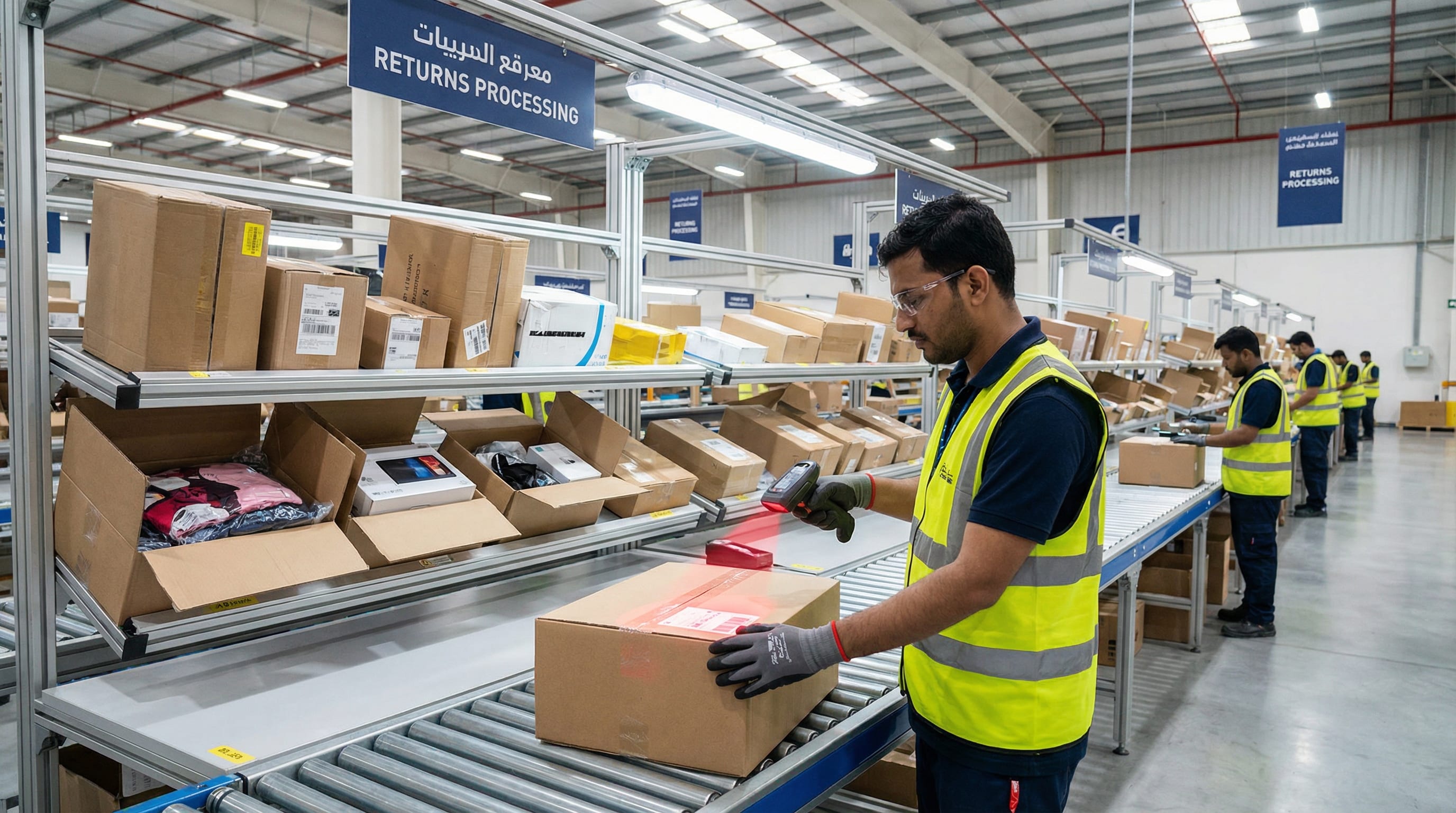
The UAE COD refusal rate sits between 20% and 30% for most merchants. Every refused order incurs a full outbound delivery cost plus a reverse logistics cost (AED 15–30), in addition to packaging depreciation and the time cost of re-processing returned inventory. At scale, this alone can exceed your total COD handling fees.
Double Logistics Costs on Failed Deliveries
A refused COD order costs you twice: once to ship out, once to ship back. At AED 15–25 per outbound leg and AED 15–30 per return, a 25% refusal rate on 1,000 monthly COD orders costs AED 7,500–13,750 per month in logistics alone — before accounting for lost sale revenue.
14–30 Day Cash Flow Delay
Most UAE logistics carriers remit COD collections weekly or bi-weekly, with some holding cash for up to 30 days. For a merchant doing AED 500,000/month in COD volume, that is AED 250,000–500,000 of working capital locked in transit at any given time — capital that cannot fund inventory replenishment or marketing spend.
Inventory Lock-Up on Returns (5–10 Days)
Returned COD items typically spend 5–10 days in transit and processing before they are back in sellable stock. For fashion, electronics, or perishable-adjacent categories, this creates meaningful deadstock periods. During peak seasons, this bottleneck can result in stockouts on high-demand SKUs while returned units sit in carrier hubs.
Prank, Fraudulent & Phantom Orders
COD requires no financial commitment at order placement, making it the preferred channel for malicious actors and casual impulse orders that buyers have no real intent to collect. Phantom order rates of 3–8% are common in UAE COD operations without pre-dispatch verification. Each phantom order costs a full outbound delivery fee.
Packaging Depreciation on Returns
Opened, handled, or transit-damaged packaging cannot be resold as new. For categories like cosmetics, supplements, or electronics, a returned COD order may require repackaging at AED 5–20 per unit, or writedown if repackaging is not feasible. This cost is rarely captured in standard COD cost analyses.
Top COD-Enabled Logistics Providers in the UAE
Not all logistics carriers in the UAE offer COD, and among those that do, the quality of cash management, reconciliation speed, and remittance terms varies significantly. The right provider for your business depends on your order volume, category type, and how you weight remittance speed against delivery network coverage.
The six providers below represent the most established COD-capable carriers operating across the UAE as of 2026. Each has distinct COD handling capabilities and serves different merchant profiles.
COD Optimization Playbook — 8 Strategies
The merchants generating the best COD economics in the UAE are not the ones with the highest COD volumes — they are the ones with the lowest RTO rates. These eight strategies represent the most consistently effective interventions across the UAE e-commerce landscape, ranked roughly from highest to lowest impact per unit of implementation effort.
Pre-Dispatch WhatsApp / IVR Verification
Contact every COD customer within 30 minutes of order placement via WhatsApp message or automated IVR call to confirm intent and delivery address. Merchants implementing this single step typically see RTO rates drop by 8–12 percentage points. Orders where the customer does not respond after two attempts within 4 hours should be flagged for manual review before dispatch.
Impact: RTO reduction of 8–12ppIncentivize Prepaid Orders (5–10% Discount)
Offer a visible 5–10% discount or free shipping upgrade for customers who switch from COD to card/wallet at checkout. This converts the most price-sensitive COD customers — those who would happily pay by card if given a financial reason — without removing COD as an option for trust-driven buyers who genuinely need it.
Impact: 15–25% of COD orders shift to prepaidZone-Based COD Policies (Green/Red Zones)
Analyze your historical COD delivery data by geography and create green zones (low RTO, offer COD freely), amber zones (moderate RTO, add COD surcharge), and red zones (high RTO, restrict COD to verified customers or disable entirely). Urban Dubai and Abu Dhabi areas typically perform differently from outer suburbs and remote delivery points.
Shrink Delivery Window to Same-Day or Next-Day
Longer delivery windows increase the probability of customer intent decay — the customer who placed a COD order on Monday genuinely wanted it, but by Thursday has forgotten, changed plans, or bought elsewhere. Same-day and next-day COD delivery consistently achieves 10–15% higher success rates than 2–5 day windows.
Impact: 10–15pp higher delivery success rateEquip Couriers with mPOS / Payment Links
Customers who are available but don’t have exact cash are a primary COD failure mode. Couriers equipped with mPOS card terminals or who can send a Tap-to-Pay link via WhatsApp can convert these near-misses into successful deliveries. Several UAE carriers (Fetchr, Quiqup) offer this capability natively.
Add a COD Surcharge (AED 5–15)
A transparent COD surcharge serves two functions: it partially offsets your handling costs, and it creates a mild price signal that nudges digital-capable customers toward prepayment. Most UAE merchants who implement AED 10 COD fees see a 10–20% reduction in COD order share with minimal impact on total conversion rate.
Typical surcharge: AED 5–15 per orderBlacklist Repeat Refusers
Maintain a COD blacklist of customers with two or more refused deliveries. Restrict these customers to prepaid-only checkout options. This addresses the small cohort of serial non-payers that disproportionately drive RTO rates — typically 3–5% of your customer base responsible for 15–20% of refusals.
Multiple Delivery Attempts (3x Minimum)
Do not write off a COD order after a single failed attempt. UAE delivery success rates increase meaningfully on second and third attempts, particularly when customers are re-notified via WhatsApp between attempts. Industry standard in the UAE is a minimum of three delivery attempts before returning the item to the merchant.
Industry standard: 3 attempts minimumCOD Pricing & Fee Structures
COD fees in the UAE are not standardized — they vary significantly by carrier, volume tier, category type, and remittance cycle. Understanding the full fee architecture prevents margin surprises and enables accurate pricing decisions. Below are the five primary fee categories you will encounter across most COD logistics UAE providers.
Note that most carriers apply fees as a combination of a flat per-order handling fee plus a percentage of the COD amount — not as a single flat fee. At higher AOVs, the percentage component becomes the dominant cost driver.
| Fee Type | Typical Range | Notes |
|---|---|---|
| COD Handling Fee | AED 5–15 / order | Flat per-shipment fee; lower at volume (1,000+ orders/month) |
| COD Percentage Fee | 1–3% of order value | Applied in addition to flat fee; accounts for cash handling risk |
| Failed Delivery Charge | AED 10–25 / attempt | Charged per failed attempt; some carriers charge only on RTO, not per attempt |
| Reverse Logistics (RTO) | AED 15–30 / return | Cost to return refused item to merchant warehouse; often negotiable at volume |
| Remittance Cycle | Weekly to Monthly | Standard is bi-weekly; some carriers offer weekly for premium accounts; faster cycles may incur a processing fee |
The Future — BNPL, Aani & Digital Wallets
The structural forces reducing COD share in the UAE are not cyclical — they are directional. Digital wallet adoption has grown from 41% to 53% between 2020 and 2024. The UAE Central Bank’s Aani instant payment network is building real-time account-to-account transfer infrastructure that eliminates the settlement delay advantage COD currently offers. UAE Pass digital identity verification is reducing the trust gap that drives many consumers toward cash in the first place.
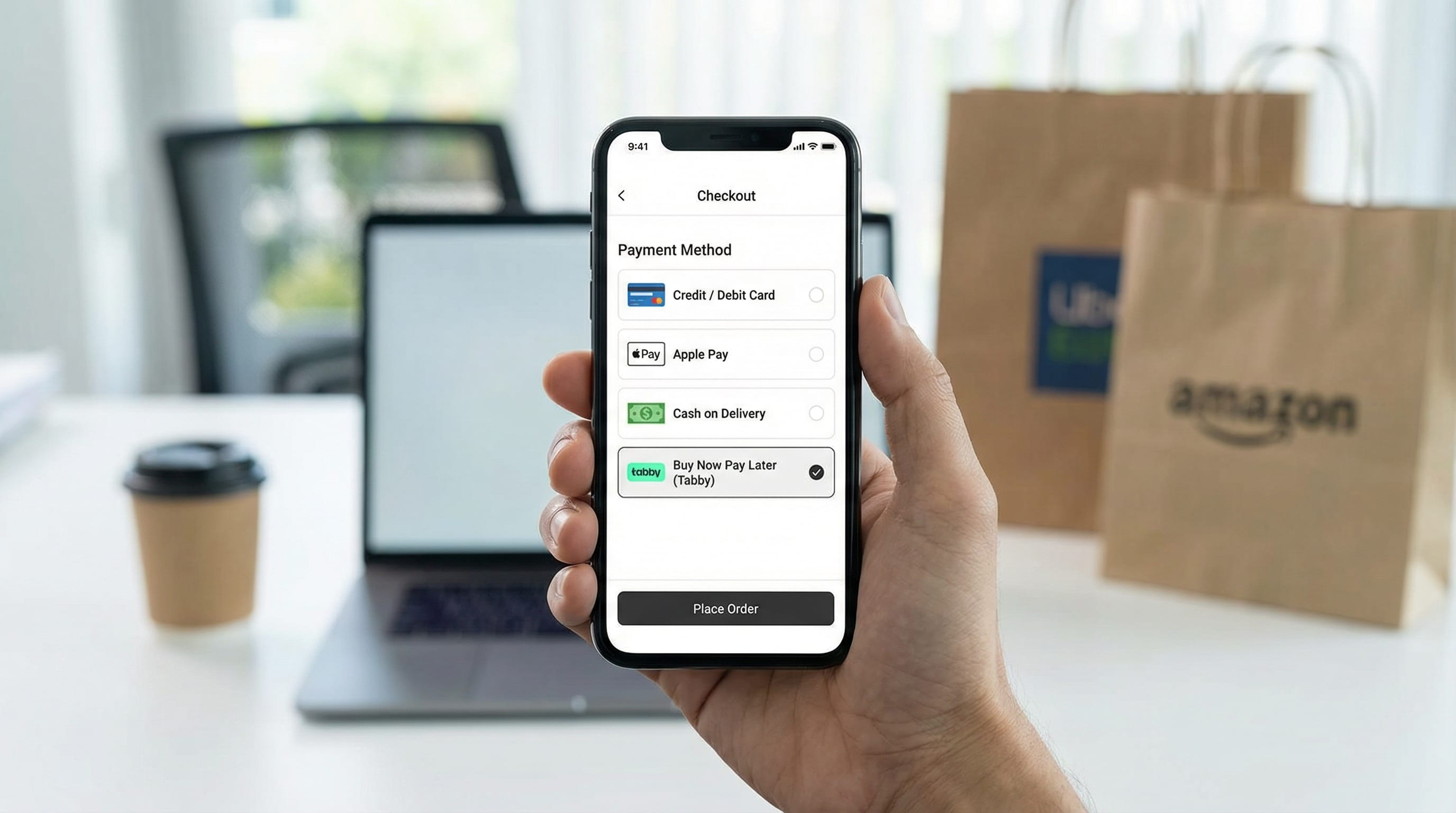
BNPL providers Tabby and Tamara have collectively processed billions in GMV across the GCC, offering consumers payment flexibility that COD cannot match: split payments, deferred settlement, and zero-interest installments. For the consumer who previously chose COD to avoid a lump-sum card charge, BNPL is a direct and superior substitute.
In q-commerce (grocery and ultra-fast delivery), where COD was historically entrenched, the shift is already advanced: only 23% of q-commerce orders are now placed with COD, compared to 38% in 2021. The trend is clear — COD’s decline will accelerate as each of these six forces matures.
Decision Framework — Should You Offer COD?
The question is not whether COD is good or bad — it is whether COD is right for your business model, customer base, and operational capacity. Use this framework to make an evidence-based decision rather than defaulting to convention or copying what competitors do.
- You are a new brand with low consumer trust and no established reviews or reputation
- Your target demographic skews older (40+) or includes lower-banked consumer segments
- Your product category is fashion, beauty, or home goods where try-before-pay resonates
- You operate in Tier 2 UAE markets or outer-suburban delivery zones where digital adoption lags
- Your AOV is below AED 300 where the COD handling cost is proportionally manageable
- Your logistics partner offers weekly or faster remittance to limit cash flow impact
- Your AOV exceeds AED 800 — COD refusal costs at high order values are disproportionately damaging
- Your customer base is digital-native (under 35, urban, smartphone-first)
- You sell luxury goods, high-end electronics, or fragile high-value items
- Your RTO rate exceeds 28% — the tipping point where COD becomes margin-negative
- You lack the working capital to absorb 14–30 day cash flow delays at your order volume
- You offer subscription or recurring purchase products where card-on-file is the natural fit
Not Sure Where Your Business Falls?
Axiom X works with UAE e-commerce brands to design COD policies, optimize last-mile fulfillment, and reduce RTO rates. Our team can benchmark your current COD economics against UAE industry norms and identify your highest-impact optimization opportunities.
Speak to Our TeamFinal Takeaway
Cash on delivery in the UAE is not dying — it is evolving. The 53% decline since 2020 reflects market maturation, not market abandonment. The 71.2% of stores still offering COD are right to do so, provided they treat it as a managed payment channel rather than a passive default. COD done well — with pre-dispatch verification, zone-based policies, mPOS hybridization, and accurate cost accounting — remains a genuine conversion driver for the right audience.
The merchants who will suffer in the next two to three years are those at the extremes: those who remove COD entirely without understanding which customer segments depend on it, and those who run COD without the operational discipline to contain RTO rates and cash flow drag. The middle path — strategic COD with rigorous optimization — remains the right approach for most UAE e-commerce businesses through at least 2027.
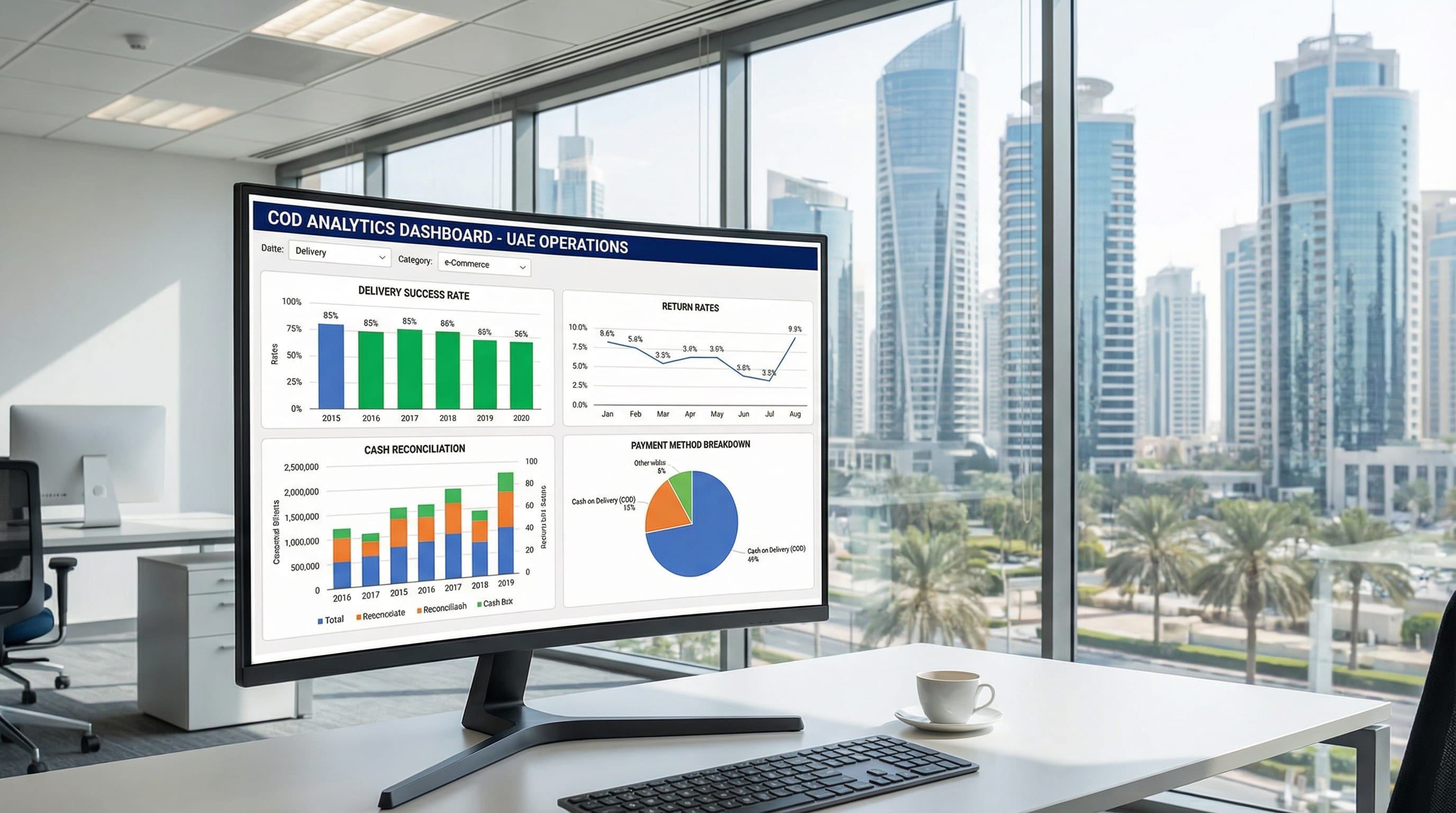
Watch the Aani network, BNPL adoption rates, and your own COD analytics quarterly. The tipping point for category-specific COD removal will arrive at different times for different businesses. When your data tells you the moment has come, you will be ready to act — because you will have already built the prepaid infrastructure to absorb the transition.
Sources & References
- Shorages.com — UAE E-Commerce Payment Methods Report, 2026. COD order share (31.6%); store adoption rate (71.2%); wallet adoption data.
- Checkout.com — UAE Digital Payments Landscape Report, 2025. Card payment success rates; digital wallet growth trajectory; consumer switching behavior data.
- The National News — "UAE Cash on Delivery: Why it persists and where it's headed," February 2026. Consumer sentiment survey; 74% card-switch statistic.
- Nexdigm — GCC E-Commerce Payment Trends Analysis, 2025. BNPL market sizing; Tabby and Tamara GMV data; payment method value share breakdown.
- Mordor Intelligence — UAE E-Commerce Market Report, 2026. Market size (AED 32.3B); 2029 forecast (AED 50.6B); CAGR projection.
- IBS Intelligence — UAE Central Bank Aani Instant Payment Network Report, 2025. Real-time payment infrastructure; merchant adoption timeline; volume projections.
- Aletihad.ae — UAE Cashless Economy Initiative Coverage, 2025. Government 2030 cashless target; regulatory support for digital payment infrastructure.
- OnTask D2D — UAE Last-Mile Delivery COD Performance Benchmarks, 2025. RTO rate ranges (20–30%); delivery attempt success rates; zone-based performance data.
- MAQUA.ae — UAE E-Commerce Logistics Industry Survey, 2026. COD remittance cycle data; logistics provider fee benchmarks; carrier capability comparison.
- IQ Fulfillment — COD Operations Guide for UAE E-Commerce Merchants, 2025. Cash reconciliation process; working capital impact analysis; operational best practices.
- Shift.in — Q-Commerce Payment Trends UAE, 2026. COD share in quick-commerce (23%); historical comparison (38% in 2021); category-specific COD trends.
- Logistics Middle East — UAE Reverse Logistics and COD Returns Report, 2025. Return-to-origin cost analysis; packaging depreciation data; inventory lock-up duration benchmarks.
Let's talk scale.
Whether you're looking to optimize delivery, centralize operations, or unlock new revenue — Axiom X is your growth partner.
Our Headquarters
UAE