
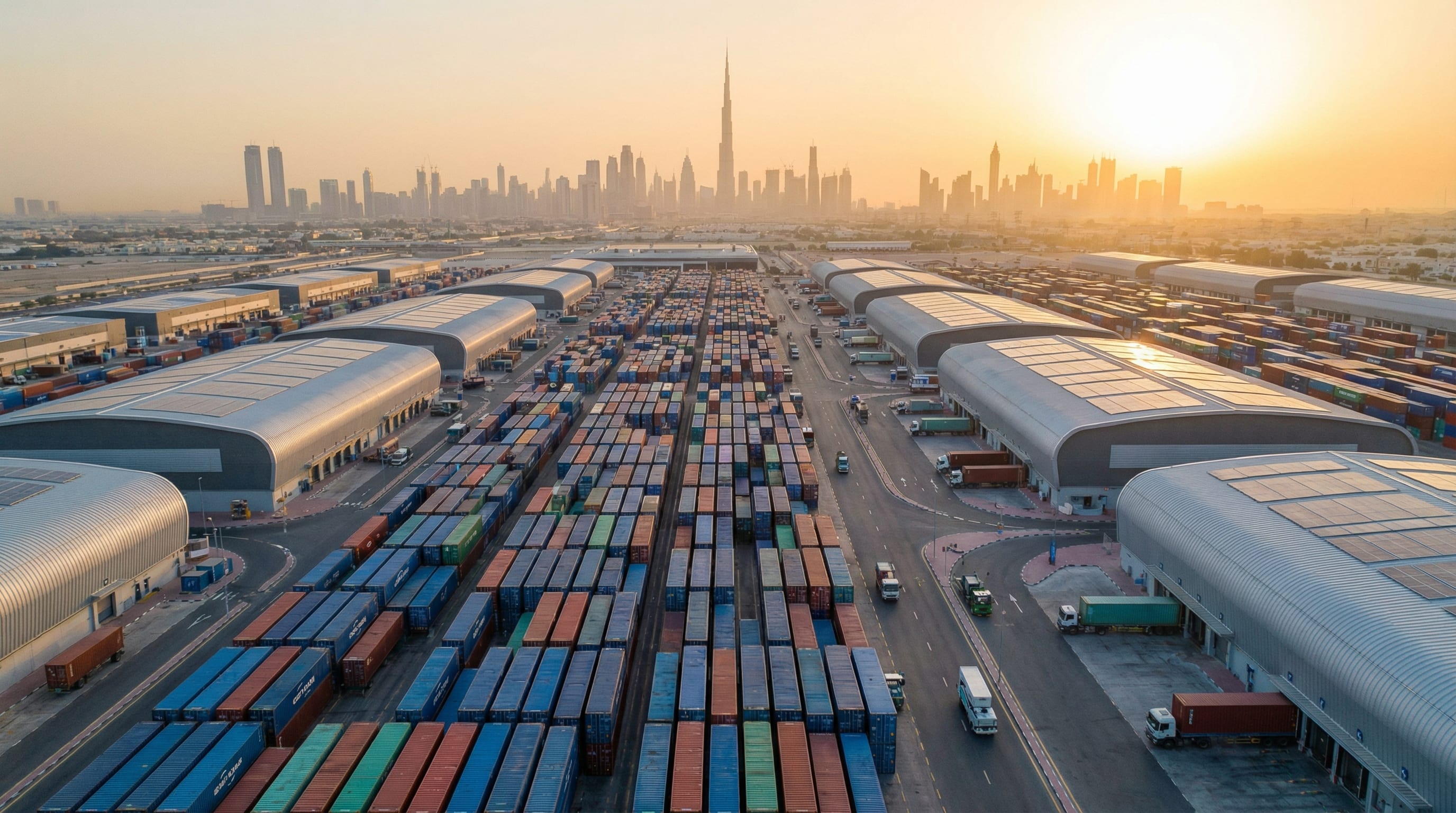
The Ultimate Guide to 3PL Logistics in the UAE: How to Choose, Use, and Scale with the Right Partner
Everything UAE businesses need to know about outsourcing logistics — from selecting the right 3PL partner to measuring performance and scaling operations across the region.
Table of Contents
What Is 3PL Logistics and Why the UAE Is Its Proving Ground
The question what is 3PL logistics has a deceptively simple answer that masks an industry worth hundreds of billions of dollars globally. A third-party logistics provider -- or 3PL -- is an external company that manages some or all of your supply chain operations, from warehousing and inventory management to freight forwarding, order fulfilment, and last-mile delivery. When you outsource these functions to a 3PL logistics company, you trade fixed infrastructure costs for variable, scalable capacity -- and you gain access to technology, networks, and expertise that would take years to build in-house.
To understand where 3PL sits, consider the logistics hierarchy. 1PL is the shipper -- the manufacturer or retailer who owns the goods. 2PL is the asset-based carrier -- the shipping line, airline, or trucking company that physically moves cargo. 3PL logistics sits above both: it orchestrates carriers, warehouses, and technology into an integrated supply chain service on your behalf. 4PL providers act as supply chain consultants managing multiple 3PLs, while 5PL aggregates entire logistics ecosystems using advanced analytics and AI. For the vast majority of mid-market and enterprise businesses operating in the UAE, the 3PL tier is where the most immediate operational leverage exists.
The UAE is not merely participating in the global 3rd party logistics services market -- it is actively reshaping it. Positioned at the crossroads of Asia, Africa, and Europe, the nation processes roughly 12% of global re-export trade. Dubai alone handles over two-thirds of the country's logistics activity, powered by infrastructure investments that most nations cannot replicate: Jebel Ali Port with its 19.4 million TEU capacity, Al Maktoum International Airport designed for 12 million tonnes of cargo annually, and a free zone ecosystem spanning JAFZA, DAFZA, Dubai South, and beyond.
The numbers reinforce the narrative. The UAE logistics market is valued at approximately $54.5 billion (IMARC Group, 2025), representing nearly 14% of national GDP. This is not a side industry -- it is a strategic pillar of the economy. For businesses asking what is 3PL logistics and whether it matters in this market, the answer is emphatic: 3PL logistics is the mechanism through which the UAE's infrastructure advantages become accessible to companies of every size.
What distinguishes UAE-based 3PL logistics from counterparts in other markets is the regulatory architecture. Free zones offer 100% foreign ownership, zero corporate tax in many cases, and streamlined customs procedures. The Federal Tax Authority's VAT framework -- relatively young but rapidly maturing -- has created compliance requirements that experienced 3rd party logistics services providers navigate daily, saving their clients from costly missteps. Add to this the nation's aggressive digitization agenda under UAE Strategy 2031, which mandates blockchain-enabled trade documentation and AI-driven customs clearance, and the case for partnering with a 3PL in this market becomes compelling.
The takeaway is clear: the UAE has engineered an environment where 3PL logistics does not just support commerce -- it accelerates it. The companies that recognize this early gain a structural advantage over those still debating whether to manage logistics themselves.
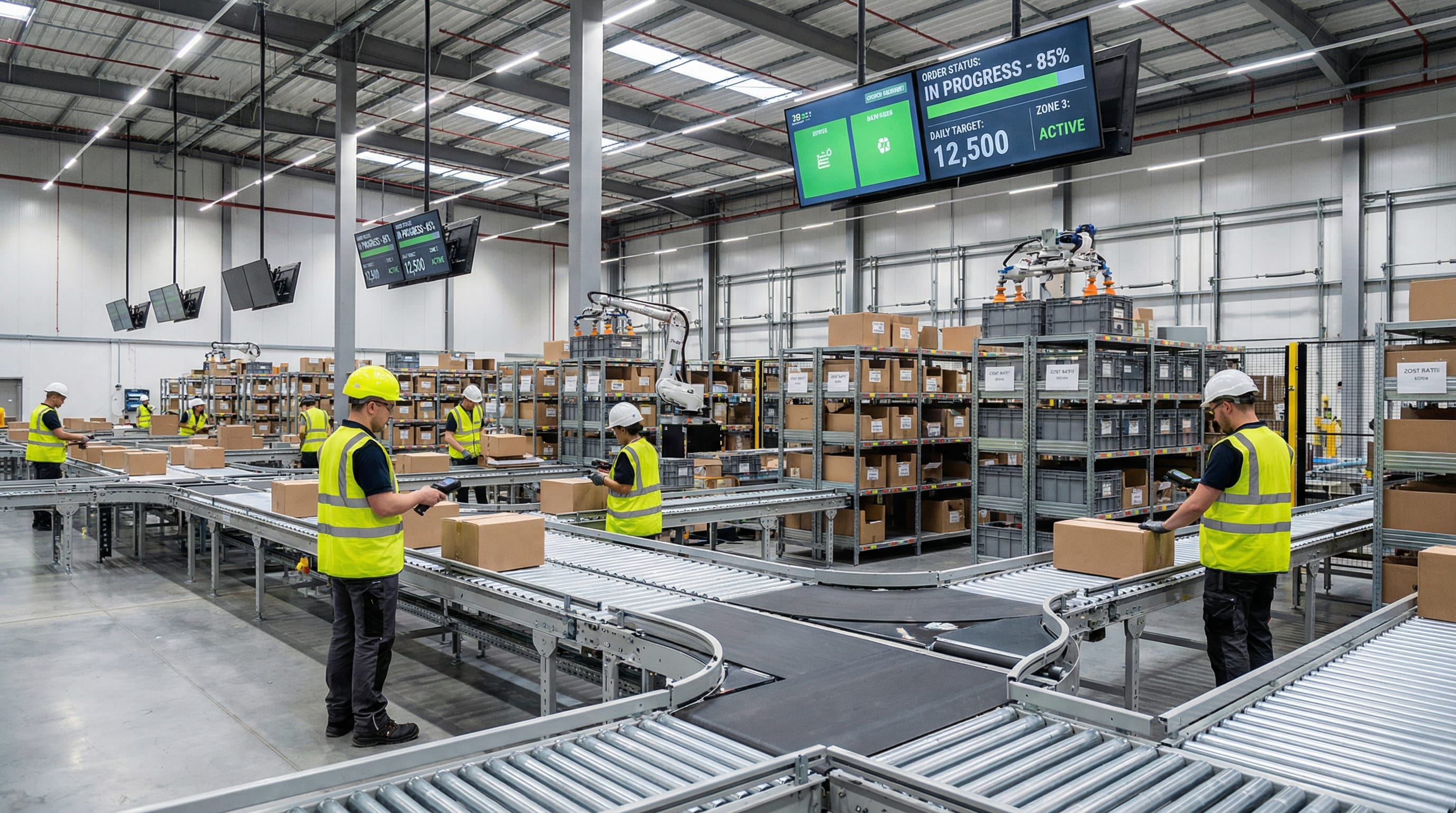
The 5 Signals You've Outgrown In-House Logistics
Every business reaches a logistics inflection point. The systems that worked when you shipped 50 orders a day collapse -- quietly at first, then catastrophically -- when volume hits 500. The challenge is recognizing that inflection point before it damages your customer relationships and market position. If you are evaluating whether to engage a 3PL logistics company, these five signals should serve as your diagnostic framework.
Most companies do not fail at logistics all at once. They erode. The shipping error rate creeps from 0.5% to 2% to 5%. The warehouse hits capacity on a Tuesday and nobody noticed it was at 87% on Monday. Growth stalls, and the leadership team blames marketing -- when the real bottleneck is an operations floor that cannot keep up with demand. A 3PL logistics partner eliminates these constraints by design, replacing your ceiling with their scalable infrastructure.
If three or more of these signals apply to your business, the cost of maintaining in-house logistics now exceeds the cost of outsourcing. 78% of UAE e-commerce brands outsource logistics by their third year of operation (Euromonitor), and the trend is accelerating as customer expectations tighten. The question is not whether you will engage a 3PL -- it is whether you will do it proactively or reactively.
Mapping the UAE 3PL Landscape -- Dubai, Abu Dhabi, and Beyond
The UAE's logistics landscape is not monolithic. Each emirate brings distinct advantages, infrastructure profiles, and strategic positioning to the table. Understanding this geography is essential for selecting the right 3PL companies in UAE -- because the best provider for a cold chain operation in Abu Dhabi may be entirely wrong for an e-commerce fulfilment centre in Dubai South.
The concentration of 3PL companies in Dubai is overwhelming by design. Dubai's free zone infrastructure -- JAFZA, DAFZA, Dubai South Logistics District -- was purpose-built to attract logistics operators. JAFZA alone hosts over 8,700 companies and contributes approximately 32% of Dubai's total trade. This creates a density of service providers, carriers, and customs brokers that accelerates every aspect of supply chain execution.
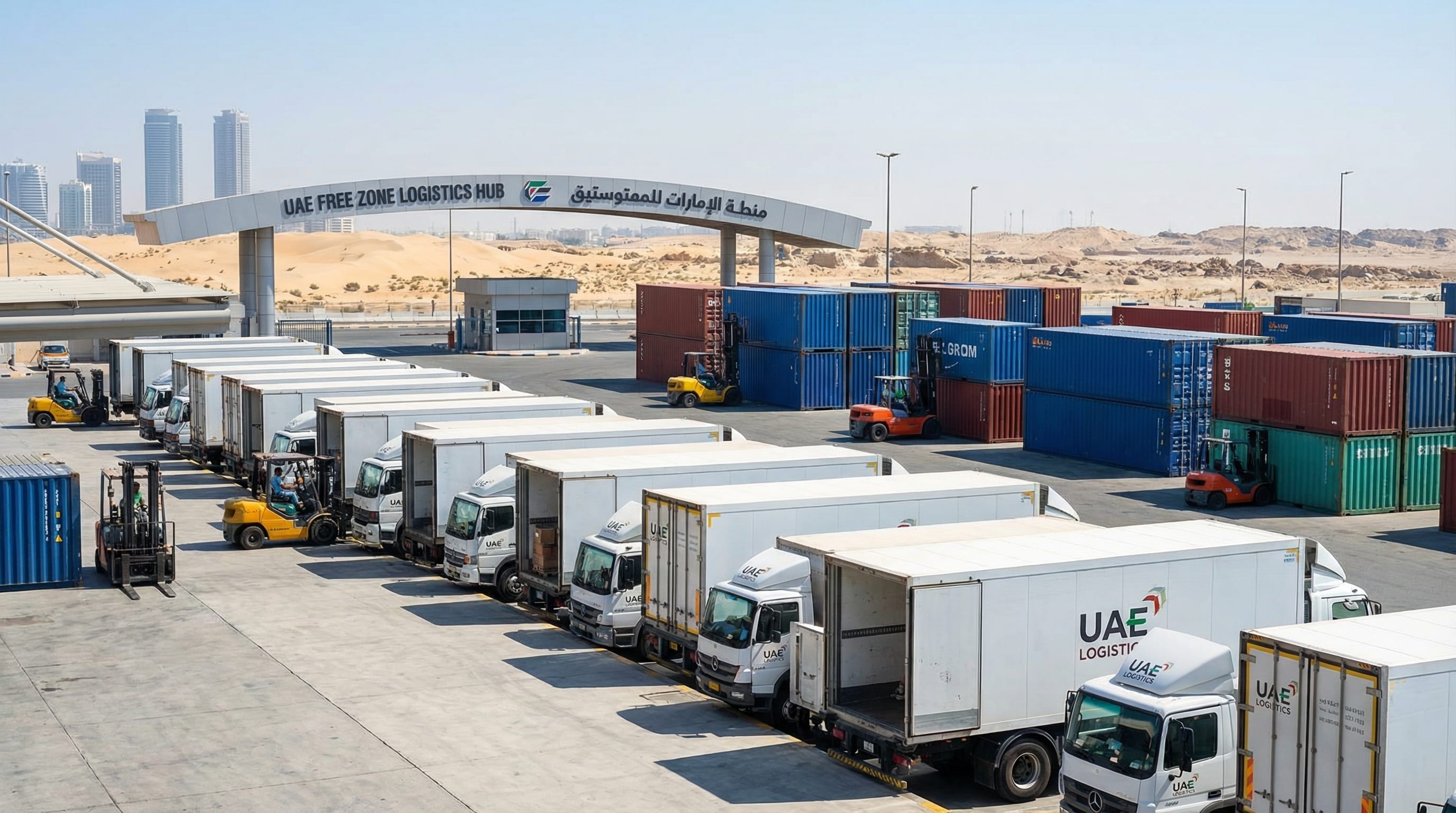
Dubai
Market LeaderThe undisputed hub for 3PL companies in Dubai. Jebel Ali Port connects to over 180 ports worldwide. Dubai South's logistics district positions operators within minutes of Al Maktoum International Airport, creating an air-sea multimodal corridor unmatched in the region.
Abu Dhabi
Fastest GrowingAbu Dhabi's KIZAD is emerging as a powerhouse for industrial logistics and cold chain operations. Khalifa Port's deep-water capabilities handle ultra-large container vessels, and the emirate's proximity to ADNOC operations drives specialized petrochemical logistics demand.
Northern Emirates
Strategic CorridorSharjah's Hamriyah Free Zone offers cost-effective warehousing for businesses that do not need to be in Dubai proper. RAK's port handles growing trade with Iran and East Africa. The Etihad Rail network -- connecting all seven emirates by rail for the first time -- will transform these northern corridors into viable alternatives for 3PL operations.
The major 3PL companies in UAE span both international operators and regional champions. Aramex, headquartered in Dubai, dominates last-mile delivery across the GCC. DP World combines port operations with comprehensive 3rd party logistics services, offering end-to-end solutions that leverage its infrastructure ownership. DHL Supply Chain and Kuehne+Nagel bring global network scale to the UAE market, while Agility and Tristar specialize in industrial and energy logistics respectively. GAC rounds out the field with particular strength in maritime and shipping logistics.
The strategic insight: do not default to Dubai for every logistics need. Evaluate where your customers, suppliers, and compliance requirements actually sit -- then match that geography to the right provider and location within the UAE.
The Selection Framework -- Evaluating 3PL Companies in UAE
Choosing a 3PL logistics company is one of the most consequential operational decisions your business will make. Get it right, and you unlock scalable infrastructure, reduced costs, and faster delivery. Get it wrong, and you inherit someone else's inefficiencies while losing control of your supply chain. This Gartner-adapted evaluation framework provides a structured methodology for assessing 3PL companies in UAE across six weighted dimensions.

Questions to Ask Every Potential 3PL Partner
Beyond the scorecard, these questions separate the serious 3PL companies in UAE from the ones still figuring things out:
- "What is your order accuracy rate over the last 12 months?" -- Anything below 99% should raise concerns. The industry benchmark from Armstrong & Associates sits at 99.2%.
- "Can you provide API documentation for your WMS within 48 hours?" -- This tests both their technical maturity and their sales team's authority to share it.
- "What happens when you exceed capacity?" -- Listen for overflow partnerships, temporary warehouse arrangements, or contingency protocols. Vague answers mean they have not thought about it.
- "How do you handle returns and reverse logistics?" -- Returns can consume 15-20% of e-commerce logistics volume. A 3PL logistics company that treats returns as an afterthought will cost you.
- "Who will be our day-to-day account manager, and what is their experience?" -- You are not hiring a company; you are hiring a team. Meet them before you sign.
Score each criterion on a 1-10 scale, apply the weights, and calculate a composite score. Any provider scoring below 7.0 overall should be eliminated from consideration. This framework removes emotion from the decision and replaces it with data -- which is exactly how 3rd party logistics services partnerships should begin.
Contract Architecture -- What to Negotiate and What to Protect
The contract you sign with a 3PL logistics provider determines every aspect of the relationship that follows -- from service quality to dispute resolution. Yet most businesses rush through this phase, eager to start operations, and end up locked into agreements that lack teeth where they need them most. Treat your 3PL contract like a construction blueprint: every clause serves a structural purpose, and missing one can compromise the entire build.
The UAE's commercial legal framework, governed by Federal Law No. 50 of 2022 (the Commercial Transactions Law), provides a solid foundation for logistics contracts. However, the specifics -- performance penalties, data ownership, insurance minimums -- must be negotiated explicitly. Free zone-specific regulations add another layer. A contract with a JAFZA-based 3PL logistics company may require different arbitration provisions than one with a mainland operator.
The following do/don't framework represents hard-won knowledge from companies that have navigated 3rd party logistics services contracts in the UAE successfully -- and from those who learned expensive lessons.
- Define clear SLAs with financial penalties. Specify order accuracy (99.2%+), on-time delivery (95%+), and damage rates (<0.1%). Attach rebate clauses for chronic underperformance.
- Require full data access and real-time reporting. You own the data your supply chain generates. Insist on dashboard access, API endpoints for your analytics tools, and monthly performance reviews.
- Include scalability clauses. Define how pricing adjusts at volume tiers (e.g., per-unit rate at 10K, 50K, 100K orders/month). Lock in capacity guarantees for peak seasons like Ramadan and White Friday.
- Establish exit provisions. Negotiate a 90-day transition assistance period, data export rights, and no retention of proprietary inventory management workflows upon termination.
- Accept vague liability terms. "Reasonable efforts" is not a legal standard you can enforce. Replace ambiguous language with specific dollar-value liability caps and documented escalation procedures.
- Skip insurance requirements. Mandate minimum coverage for goods in transit, warehouse inventory, and professional indemnity. Verify policy terms independently -- do not take the 3PL's word for it.
- Agree to auto-renewal without notice. Auto-renewal clauses with short notice windows trap businesses in underperforming relationships. Require 120+ days written notice and mutual opt-in renewal.
- Ignore IP and data ownership. Your customer data, shipping patterns, and demand forecasts are competitive assets. The contract must explicitly state that these remain your property during and after the relationship.
One clause that UAE-based businesses frequently overlook: force majeure with logistics-specific triggers. Standard force majeure covers wars and natural disasters. But port congestion, carrier strikes, and sudden regulatory changes (e.g., new customs documentation requirements) can be equally disruptive. Define these scenarios explicitly and specify how costs and timelines adjust when they occur.
The bottom line: a well-architected contract protects both parties and creates the foundation for a productive, long-term 3PL logistics partnership. Invest the time upfront -- it will save you multiples of that investment in avoided disputes later.
Onboarding and Integration -- The First 90 Days
The first 90 days with a new 3PL logistics company determine whether the partnership will deliver on its promise or become another vendor relationship that underperforms. This is not a "set it and forget it" transition -- it requires active management, clear milestones, and a willingness to course-correct quickly. The following three-phase timeline provides a proven framework for onboarding with any 3PL provider in the UAE market.
Phase 1: Foundation (Days 1-30)
This phase is about connecting systems and establishing communication protocols. Your WMS must integrate with the 3PL's platform -- typically via API or EDI. Migrate your SKU catalogue, current inventory counts, and order history. Assign a dedicated project manager on your side who mirrors the 3PL's onboarding lead. Define standard operating procedures for receiving, picking, packing, and shipping. Conduct joint training sessions so both teams speak the same operational language.
Phase 2: Validation (Days 31-60)
Run parallel operations -- processing orders through both your legacy system and the new 3PL simultaneously. This reveals integration gaps, data sync issues, and process mismatches before they affect customers. Begin tracking SLA metrics against the benchmarks established in your contract. Hold weekly check-ins with the 3PL's account team to review discrepancies and refine workflows. This phase is uncomfortable by design -- it surfaces problems while they are still cheap to fix.
Phase 3: Acceleration (Days 61-90)
Complete the transition to full 3PL operations. Decommission legacy logistics infrastructure. Focus on cost optimization -- negotiate carrier rates based on actual volume data from the first 60 days. Establish the quarterly business review cadence that will govern the ongoing relationship. Lock in the KPI dashboard that both parties will reference going forward. By day 90, your 3PL logistics company should feel like an extension of your team, not an external vendor.
Measuring Performance -- KPIs That Actually Matter
Managing a 3PL logistics relationship without defined KPIs is like flying without instruments -- you will not know you are off course until the crash. The metrics below represent the industry-standard benchmarks for 3rd party logistics services performance in the UAE market. Track them monthly, review them quarterly, and use them as the factual basis for every performance conversation with your provider.
The key insight: not all KPIs are created equal. Order accuracy and on-time delivery directly impact customer satisfaction and retention. Inventory accuracy affects your working capital and procurement decisions. Cost per order determines your unit economics. Prioritize the metrics that connect most directly to your business outcomes.
Beyond the Numbers: Qualitative Indicators
Quantitative KPIs tell you what happened. Qualitative indicators tell you what is about to happen. Pay attention to these leading signals:
- Response time to escalations. Does your 3PL resolve critical issues within 2 hours or 2 days? The speed of response reveals their operational discipline.
- Proactive communication. The best 3PL logistics partners alert you to potential problems before they occur -- carrier delays, capacity constraints, regulatory changes.
- Innovation proposals. A partner invested in your success will regularly suggest process improvements, technology upgrades, and cost-saving initiatives. If they have not proposed anything new in 6 months, they are coasting.
- Staff turnover at your account level. Frequent changes in your dedicated team signal internal problems at the 3PL that will eventually affect your service quality.
Build these qualitative measures into your quarterly business reviews alongside the hard data. The combination gives you a complete picture of whether your 3PL logistics company is genuinely performing or simply meeting the minimum threshold of acceptability.
Scaling with Your 3PL -- From Local to Regional
The UAE is not the destination -- it is the launchpad. The 3PL companies in UAE that deliver the most value are those that can grow with you from a single-emirate operation to a multi-country GCC presence. Scaling with a 3PL is not a linear process; it is cyclical. You assess, expand, integrate, measure, and reassess -- continuously tightening the loop as your operations mature.

Scaling
Cycle
GCC Expansion Playbook
Saudi Arabia's Vision 2030 is driving explosive logistics demand. Oman's Duqm port offers a strategic alternative to Strait of Hormuz routing. Bahrain's compact geography enables same-day delivery across the entire nation. Each GCC market has unique customs regimes, labelling requirements, and consumer expectations. The right 3PL logistics partner already has boots on the ground in these markets and can replicate what works in the UAE without starting from scratch.
Cold Chain at Scale
Cold chain logistics -- temperature-controlled storage and transport for pharmaceuticals, food, and cosmetics -- is the fastest-growing segment of 3rd party logistics services in the region. Scaling cold chain across borders introduces compliance complexity: GCC pharma regulations vary by country, and the UAE's Ministry of Health requires specific GDP (Good Distribution Practice) certifications that not all 3PLs possess. Verify cold chain capabilities at every link in the chain, not just at the warehouse.
Multi-Country Compliance
Each GCC country has distinct import regulations, documentation requirements, and prohibited goods lists. A 3PL logistics company with genuine regional capability maintains dedicated compliance teams per market -- not a single generalist trying to cover six countries. Ask specifically about in-country customs brokerage licenses and local regulatory relationships.
Scaling is not about doing more of the same -- it is about doing the right things in the right markets at the right time. Your 3PL should be a strategic advisor in this process, not just an order-taker.
Frequently Asked Questions
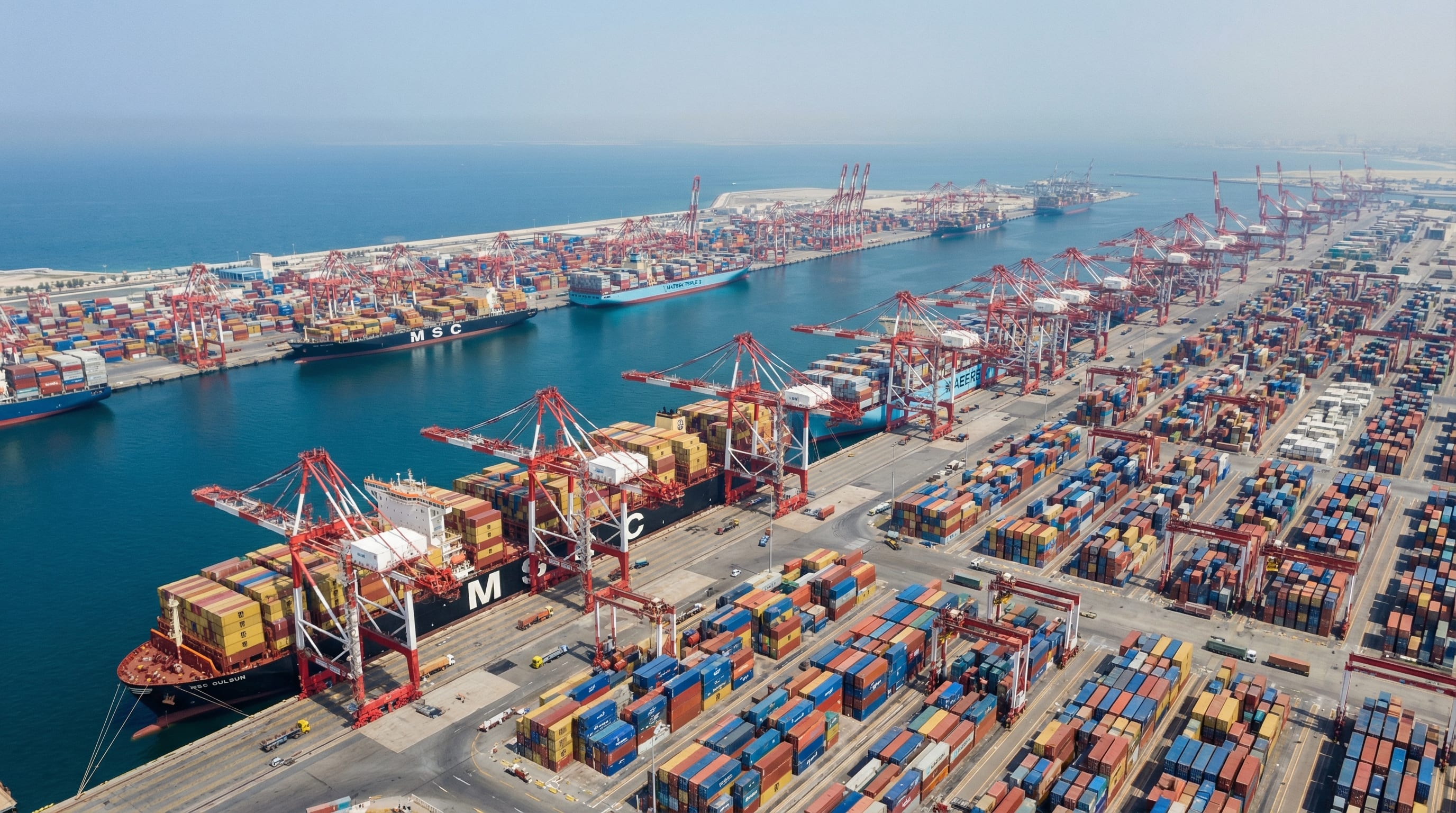
3PL logistics -- or third-party logistics -- refers to the outsourcing of supply chain operations to an external provider. A 3PL logistics company manages warehousing, order fulfilment, freight forwarding, inventory management, and last-mile delivery on your behalf. Unlike a simple carrier (2PL), a 3PL integrates multiple logistics functions into a single service layer, providing technology platforms, compliance management, and scalable infrastructure. In the UAE, 3PL providers operate across free zones and mainland, handling everything from e-commerce fulfilment to industrial supply chain management.
Use a weighted evaluation framework covering six criteria: Technology & Systems Integration (25%), Geographic Coverage (20%), Industry Experience (20%), Scalability (15%), Compliance & Certifications (10%), and Financial Stability (10%). Score each provider on a 1-10 scale across these dimensions. Request live demos of their WMS, speak with existing clients in your industry, and visit their warehouse facilities in person. Prioritize providers who can demonstrate measurable outcomes -- order accuracy rates, delivery performance data, and cost-per-order trends -- rather than those relying solely on sales presentations.
It depends on your business model. Free zone-based 3PL companies in UAE offer advantages including 100% foreign ownership, duty deferral on goods in transit, and streamlined customs processes. If your business primarily imports goods for re-export to other markets, a free zone 3PL is typically the most cost-effective choice. However, if you sell primarily within the UAE domestic market, a mainland-licensed 3PL avoids the dual customs clearance that free zone operations require for local delivery. Many businesses use a hybrid approach -- a free zone 3PL for international logistics and a mainland partner for last-mile domestic delivery.
3PL pricing in the UAE varies significantly based on service scope, volume, and storage requirements. Typical cost structures include: warehousing (AED 15-45 per pallet per month), pick-and-pack (AED 3-12 per order), last-mile delivery (AED 8-25 per shipment within Dubai), and freight forwarding (variable by route and mode). Most 3PL companies in Dubai offer tiered pricing that decreases at higher volumes. Cold chain services command a 40-60% premium over ambient storage. Request detailed rate cards from at least three providers and compare total cost of ownership, not just line-item rates.
Common hidden costs include: minimum volume charges (you pay even if you ship below threshold), peak season surcharges (can add 15-30% during Ramadan and Q4), system integration fees, returns processing fees, special packaging charges, insurance premiums above standard coverage, and early termination penalties. Always request a complete fee schedule before signing and model total costs under both average and peak-season scenarios. The cheapest per-unit rate often becomes the most expensive when ancillary charges are included.
The leading 3PL companies in Dubai include Aramex (last-mile and e-commerce fulfilment), DP World (end-to-end supply chain with port infrastructure), DHL Supply Chain (global network with UAE facilities), Kuehne+Nagel (freight forwarding and contract logistics), and Agility (industrial and project logistics). Regional specialists like Tristar (energy and chemicals) and GAC (maritime logistics) serve specific verticals. The "best" provider depends entirely on your industry, volume, geographic requirements, and technology needs. Use the evaluation scorecard approach rather than relying on brand recognition alone.
3rd party logistics services in the UAE typically include: warehousing and storage (ambient, temperature-controlled, hazmat), order fulfilment (pick, pack, ship), inventory management (real-time WMS tracking), freight forwarding (sea, air, road, rail), customs brokerage (import/export documentation), last-mile delivery, returns and reverse logistics, value-added services (kitting, labelling, quality inspection), supply chain consulting, and technology integration (API connections to your e-commerce platforms and ERP systems). Comprehensive providers cover the entire chain; niche operators specialize in specific segments.
A typical onboarding timeline with a 3PL logistics company in the UAE is 60-90 days. The first 30 days focus on system integration, data migration, and team alignment. Days 31-60 involve parallel operations where both your legacy system and the 3PL run simultaneously to identify gaps. Days 61-90 cover full transition, optimization, and establishing the quarterly review cadence. Complex operations -- those involving cold chain, hazardous materials, or multi-country compliance -- may require 120+ days. The critical success factor is assigning a dedicated project manager on your side who mirrors the 3PL's onboarding lead.
Sources & References
- IMARC Group -- UAE Logistics Market Size, Share, Trends and Forecast, 2025. Valued at $54.5 billion.
- Mordor Intelligence -- UAE Third-Party Logistics (3PL) Market Analysis, 2025. Dubai holds 68% market share.
- DP World -- Jebel Ali Port Annual Report, 2025. Container handling capacity of 19.4 million TEU.
- Armstrong & Associates -- 3PL Performance Benchmarking Study, 2025. Order accuracy benchmark of 99.2%.
- Euromonitor International -- E-Commerce Logistics in the UAE, 2025. 78% of brands outsource by Year 3.
- Gartner -- Adapted evaluation framework methodology for logistics partner assessment.
Let's talk scale.
Whether you're looking to optimize delivery, centralize operations, or unlock new revenue — Axiom X is your growth partner.
Our Headquarters
UAE